• HOME
  • CHI SIAMO
  • CONTATTI
  • PARTNER
  • PUBBLICITÀ
  • NEWSLETTER
  • ARCHIVIO
    • Bandi e Opportunità
    • Speciali
    • Rubriche
    • Nutrizione e salute
    • Interviste
    • Video
mercoledì 16 Settembre, 2026
Pesceinrete
  • Pesca
  • Nutrizione e salute
  • Acquacoltura
    • Acquaponica
    • Algocoltura
  • Approfondimenti
  • Tecnologia
  • Sostenibilità
  • Mercati
  • OverseasNew
Nessun Risultato
Vedi tutti i Risultati
Pesceinrete
  • Pesca
  • Nutrizione e salute
  • Acquacoltura
    • Acquaponica
    • Algocoltura
  • Approfondimenti
  • Tecnologia
  • Sostenibilità
  • Mercati
  • OverseasNew
Nessun Risultato
Vedi tutti i Risultati
Pesceinrete
Nessun Risultato
Vedi tutti i Risultati

Home Overseas

Aquaculture Feed Sustainability Trade-Offs

Reducing wild fish use lowers marine pressure, but increases land, water and climate impacts in European aquaculture.

Davide Ciravolo by Davide Ciravolo
25 Febbraio 2026
in Overseas
Aquaculture Feed Sustainability Trade-Offs

Aquaculture Feed Sustainability Trade-Offs

For years, the sustainability of aquaculture feeds has largely been framed around one simple question: how much fishmeal and fish oil are we still using? Reducing dependence on wild-caught fish has become the symbolic benchmark — the headline metric, the figure most often quoted.

However, research led by Björn Kok and Wesley Malcorps of the Institute of Aquaculture at the University of Stirling challenges this widespread equation. Cutting marine ingredients in feed can indeed reduce pressure on ocean resources, but it does not automatically make aquaculture more sustainable overall. In Europe, the gradual phase-out of fishmeal and fish oil has brought significant environmental trade-offs.

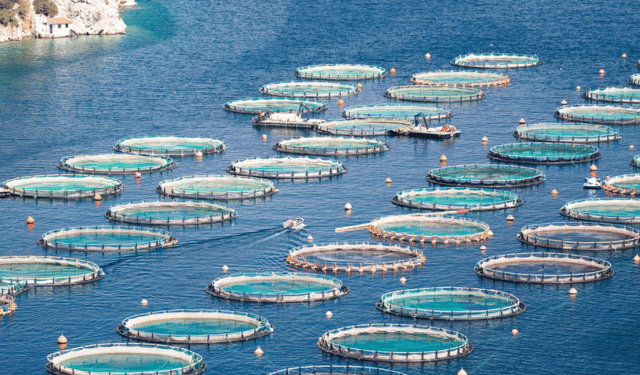
Between 2000 and 2020, European aquaculture reduced its total use of wild fish in feed by 13%, despite the sector nearly doubling in size. Much of this expansion was driven by Atlantic salmon farming, particularly in Norway.

The critical point is that, during the same period, several key environmental indicators increased sharply

Greenhouse gas emissions rose by 314%, land use by 594%, and freshwater consumption by 236%. Even more striking were eutrophication impacts — the nutrient accumulation that fuels algal blooms and ecosystem imbalances — with marine eutrophication up 630% and freshwater eutrophication up 468%.

To interpret these results correctly, an important clarification is needed: this is not about “grading” aquaculture or arguing that reducing wild fish inputs is a mistake. Rather, the study highlights the risks of evaluating sustainability through a single metric. Environmental impacts do not disappear — they often shift.

Environmental Indicator (per kg of farmed fish) Change (2000–2020)
Wild fish use –59%
Land use +336%
Greenhouse gas emissions +103%
Marine eutrophication +285%

The study applies a method known as Index Decomposition Analysis, which separates the influence of different factors. It isolates what is driven by sector growth, what results from efficiency improvements, and what stems from changes in feed composition. This methodological step is crucial, as it avoids conflating distinct drivers and allows for a clearer understanding of what is truly shaping aquaculture’s environmental footprint.

One of the most uncomfortable findings concerns substitute ingredients. According to the analysis, replacing marine ingredients with plant-based alternatives has increased feed-related environmental impacts — particularly due to two widely used components: soy protein concentrate and rapeseed oil. In the model, these ingredients show a disproportionately high environmental burden relative to their inclusion rates, helping explain why some indicators rise even as reliance on wild fish declines.

By contrast, other factors often highlighted in public debate — such as the mix of farmed species in Europe or improvements in feed conversion efficiency — played little or no role in explaining the overall impact differences during the period examined.

The picture becomes even clearer when examining impacts per kilogram of farmed fish

Over twenty years, wild fish use per kilogram dropped by 59%. Yet per kilogram emissions rose by 103%, land use by 336%, and freshwater consumption by 65%. Eutrophication also increased significantly: +285% in marine systems and +167% in freshwater environments.

In simple terms: dependence on marine resources has declined. But the trade-off has been a heavier footprint elsewhere — particularly on land, where crop production, industrial processing, land occupation, and supply chains come into play.

This leads to one of the study’s most concrete recommendations. To genuinely improve overall sustainability balance, researchers point to an underutilized asset already available: fish processing by-products. These are nutrient-rich, carry relatively low environmental impact because they originate from existing value chains, and may represent a more robust solution than an automatic shift toward high-footprint plant ingredients.

In the background remain so-called novel alternative ingredients, often presented as the next breakthrough. The potential is real, but the research stresses that they still face practical constraints: inconsistent quality, limited availability, and high costs. At their current scale and level of development, they are not yet delivering the comprehensive environmental performance many had assumed.

The ultimate lesson is both simple and demanding: reducing wild fish use in aquaculture feeds is an important step, but it cannot be the sole benchmark. Focusing on a single parameter risks telling an incomplete — and sometimes misleading — story. True sustainability, the kind that endures across industrial decisions and long-term strategies, is built on measured trade-offs and attention to detail. And in aquaculture feeds, as is often the case, that is precisely where the direction is decided.
Tags: AquacultureaquafeedAtlantic salmon farmingenvironmental footprintEuropean aquacultureeutrophicationfeed innovationfeed sustainabilityfish oilfishmealgreenhouse gas emissionsland userapeseed oilsoy protein concentratesustainable seafood
CondividiTweetCondividiPinInviaCondividiInvia
Articolo precedente

Aquaculture Innovation Zone: le prime aziende che disegnano il futuro dell’acquacoltura

Prossimo articolo

AIC Pesca al fianco del Comune di Favignana contro il maxi eolico offshore MedWind

Davide Ciravolo

Davide Ciravolo

Autore Pesceinrete, retail ittico e mercati seafood Davide Ciravolo è autore Pesceinrete. Si occupa di mercati, distribuzione e scenari commerciali della filiera ittica, con particolare attenzione al rapporto tra prodotto, retail e consumi. La sua esperienza come ex buyer di Esselunga gli permette di osservare il settore seafood anche dal punto di vista della GDO e delle dinamiche di assortimento.

Articoli Correlati

Fishing vessel at sea as warmer ocean temperatures and El Niño shift fish distribution and fishing grounds

El Niño is set to become very strong. Warmer seas are redrawing the geography of fishing

by Luca Di Noto
15 Settembre 2026

What happens to fisheries when seas become warmer? Warmer seas do not simply mean fewer fish. They can change where...

Imported caviar at the centre of the European debate on origin transparency

Imported caviar, European aquaculture calls for clearer origin information

by Mariella Ballatore
11 Settembre 2026

Imported caviar from non-EU countries has become a test case in European aquaculture’s call for greater origin transparency. FEAP warns...

Italian seafood presented to buyers at Seafood Expo Asia in Singapore

From blue crab to red shrimp, buyers put Italy’s seafood supply chain to the test in Singapore

by Redazione
9 Settembre 2026

From blue crab seeking an industrial supply chain to traceable bivalve molluscs and red shrimp for fine dining, Italy is...

Salmon fillet on the processing line at Freezco Eesti in Tallinn

Freezco expands salmon processing for the italian market

by Davide Ciravolo
7 Settembre 2026

Freezco has expanded salmon processing for the Italian market through Freezco Eesti, a facility in Tallinn launched in May 2026....

Lascia un commento Annulla risposta

Il tuo indirizzo email non sarà pubblicato. I campi obbligatori sono contrassegnati *

Questo sito utilizza Akismet per ridurre lo spam. Scopri come vengono elaborati i dati derivati dai commenti.


Articoli più letti

  • 10 pesci costosi e prelibati
  • Le specie di sarago del Mediterraneo
  • Pesci con più e meno mercurio
  • Molva, una ricchezza del Mare del Nord
  • Molluschi bivalvi: descrizione e caratteristiche
  • Congelare il tonno in scatola
  • Gattuccio e palombo, gli squali buoni da mangiare
  • Triglia: caratteristiche e proprietà nutrizionali
  • Mangiare il tonno crudo: vantaggi e pericoli
  • Sgombro e lanzardo, pesce azzurro per il cuore
Pesceinrete

Pesceinrete è la testata giornalistica unica in Italia ad occuparsi di pesca commerciale ed acquacoltura. In quanto canale tematico e dai contenuti specializzati, si rivolge direttamente agli operatori della filiera con una comunicazione targettizzata che risponde alle esigenze del settore.

Segui le nostre pagine social

Stock images by Depositphotos

Newsletter

Categorie

  • News Ittico
  • Pesca
  • Acquacoltura
  • Associazioni di categoria
  • Sindacati
  • ONG
  • Tecnologia
  • Sostenibilità
  • Mercati
  • Eventi e Fiere
  • Overseas
  • Nutrizione e salute
  • Approfondimenti
  • Chi siamo
  • Policy editoriali
  • Partner
  • Contatti
  • Pubblicità
  • Newsletter
  • Mappa del sito

© 2026 INRETE S.R.L. P.Iva: 02557660814 - Pesceinrete - Il quotidiano del settore ittico | Credits

Pesceinrete
Gestisci Consenso

Usiamo cookie tecnici per far funzionare il sito, e cookie statistici (anche di terze parti) per capire come viene usato e migliorarlo. Puoi accettare tutto, rifiutare tutto o scegliere quali attivare — restando comunque libero di navigare senza restrizioni.

Funzionale Sempre attivo
L'archiviazione tecnica o l'accesso sono strettamente necessari al fine legittimo di consentire l'uso di un servizio specifico esplicitamente richiesto dall'abbonato o dall'utente, o al solo scopo di effettuare la trasmissione di una comunicazione su una rete di comunicazione elettronica.
Preferenze
L'archiviazione tecnica o l'accesso sono necessari per lo scopo legittimo di memorizzare le preferenze che non sono richieste dall'abbonato o dall'utente.
Statistiche
L'archiviazione tecnica o l'accesso che viene utilizzato esclusivamente per scopi statistici. L'archiviazione tecnica o l'accesso che viene utilizzato esclusivamente per scopi statistici anonimi. Senza un mandato di comparizione, una conformità volontaria da parte del vostro Fornitore di Servizi Internet, o ulteriori registrazioni da parte di terzi, le informazioni memorizzate o recuperate per questo scopo da sole non possono di solito essere utilizzate per l'identificazione.
Marketing
L'archiviazione tecnica o l'accesso sono necessari per creare profili di utenti per inviare pubblicità, o per tracciare l'utente su un sito web o su diversi siti web per scopi di marketing simili.
  • Gestisci opzioni
  • Gestisci servizi
  • Gestisci {vendor_count} fornitori
  • Per saperne di più su questi scopi
Personalizza
  • {title}
  • {title}
  • {title}
  • Home
  • Nutrizione e salute
  • Pesca
  • Acquacoltura
  • Approfondimenti
  • Tecnologia
  • Sostenibilità
  • Mercati
  • Overseas English NEW
  • Archivio
  • Chi siamo
  • Contatti
  • Partner
  • Pubblicità
  • Newsletter
Nessun Risultato
Vedi tutti i Risultati

© 2026 INRETE S.R.L. P.Iva: 02557660814 - Pesceinrete - Il quotidiano del settore ittico | Credits