• HOME
  • CHI SIAMO
  • CONTATTI
  • PARTNER
  • PUBBLICITÀ
  • NEWSLETTER
  • ARCHIVIO
    • Bandi e Opportunità
    • Speciali
    • Rubriche
    • Nutrizione e salute
    • Interviste
    • Video
mercoledì 16 Settembre, 2026
Pesceinrete
  • Pesca
  • Nutrizione e salute
  • Acquacoltura
    • Acquaponica
    • Algocoltura
  • Approfondimenti
  • Tecnologia
  • Sostenibilità
  • Mercati
  • OverseasNew
Nessun Risultato
Vedi tutti i Risultati
Pesceinrete
  • Pesca
  • Nutrizione e salute
  • Acquacoltura
    • Acquaponica
    • Algocoltura
  • Approfondimenti
  • Tecnologia
  • Sostenibilità
  • Mercati
  • OverseasNew
Nessun Risultato
Vedi tutti i Risultati
Pesceinrete
Nessun Risultato
Vedi tutti i Risultati

Home Overseas

ASC launches global consultation on aquaculture in protected areas

Aquaculture Stewardship Council opens international dialogue to clarify how aquaculture can operate in or near protected ecosystems without compromising biodiversity goals.

Tiziana Indorato by Tiziana Indorato
16 Marzo 2026
in Overseas
aquaculture in protected areas

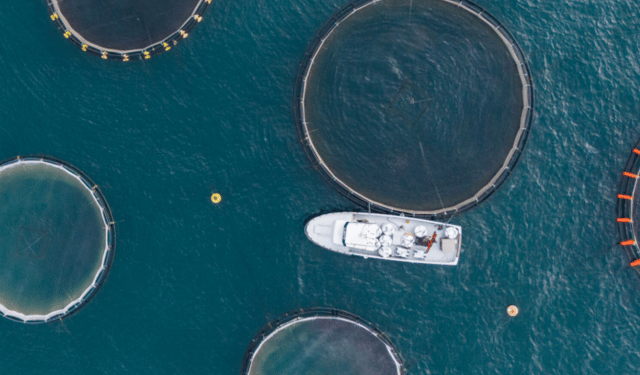
Growing seafood production without compromising fragile ecosystems. This is the challenge that the Aquaculture Stewardship Council (ASC) has decided to address by opening an international public consultation on the relationship between aquaculture and protected areas.

The initiative touches directly on the future of the sector, bringing together three interconnected dimensions: food production, biodiversity conservation and the credibility of environmental certification standards.

The consultation, open until 9 April, comes at a time when two global trajectories are increasingly intersecting. On one side, aquaculture continues to strengthen its role as a strategic source of food supply. On the other, the expansion of protected areas — including marine and coastal zones — is increasing scrutiny on productive activities operating within or near these ecosystems.

Between these two trends lies a question the sector can no longer avoid: under what conditions can aquaculture truly be considered compatible with strict conservation objectives?

ASC is attempting to answer this question through an open dialogue with stakeholders directly involved in the issue. Producers, NGOs, academics, civil society organisations, brands, retailers, suppliers, industry representatives and certification bodies are all invited to contribute to a process aimed at reducing ambiguities and inconsistent interpretations.

The ambition goes beyond simply updating a set of technical criteria. The objective is to build a clearer and more coherent framework in a field where ecological balances are delicate and reputational consequences increasingly significant.

According to Dan Auwkit, ASC Environmental Standards Coordinator, the simultaneous expansion of aquaculture and protected areas now requires a more structured reflection. For the organisation, there is a clear opportunity to better align food production with conservation goals by understanding how aquaculture can be responsibly developed within or near protected ecosystems while supporting biodiversity and safeguarding the future of the sector.

The work announced by ASC will examine existing standards and interpretative guidelines currently in use, comparing them with the categories of protected areas defined by the International Union for Conservation of Nature (IUCN) and with national legislation applicable in different jurisdictions.

The central task will be identifying the grey areas: unclear requirements, possible inconsistencies and passages that currently leave room for non-uniform interpretations by auditors, companies and stakeholders.

The initiative has a medium-term horizon and is expected to conclude in 2028. Planned outcomes include a revision of requirements within a future version of the ASC Farm Standard, an update of the ASC Interpretation Manual, and the development of a joint ASC-IUCN technical guidance document.

This is therefore not a marginal adjustment but a process that could significantly influence how the relationship between aquaculture operations and protected ecosystems will be assessed in the coming years.

A key stage will be the testing of the new framework in selected geographical areas. This is where theoretical principles will need to prove capable of functioning in real-world conditions.

Establishing general principles is necessary, but not sufficient. The criteria developed must work across different regulatory contexts, within highly diverse ecosystems and across supply chains characterised by very different production models.

According to ASC, the final outcome should provide evidence-based guidance for assessing the compatibility of aquaculture activities with conservation objectives, improve audit consistency and strengthen the credibility of certification schemes in the eyes of governments, environmental organisations and the market.

In practical terms, the aim is to reduce ambiguity and increase certainty in one of the most sensitive areas of the sustainability debate.

The value of this consultation lies precisely in this effort. Not in declaring an automatic compatibility between aquaculture and protected areas, but in attempting to establish clearer, more verifiable and more transparent rules.

For the seafood sector, this is a development worth close attention. The future of aquaculture will not depend solely on the capacity to produce more seafood, but also on the ability to demonstrate — with credible tools — where and how production can expand without eroding the natural capital on which the entire system ultimately depends.
Tags: Aquacultureaquaculture in protected areasaquaculture policyAquaculture Stewardship Councilaquaculture sustainabilityASC certificationbiodiversity conservationBlue Economyenvironmental certificationIucnmarine protected areasseafood governanceseafood sustainabilitysustainable aquaculture managementsustainable seafood standards
CondividiTweetCondividiPinInviaCondividiInvia
Articolo precedente

Restyling per l’etichetta ASC: più chiarezza per i consumatori

Prossimo articolo

La regola di Ostrom: una via per la gestione condivisa del gambero rosso nel Mediterraneo

Tiziana Indorato

Tiziana Indorato

Autrice Pesceinrete Tiziana Indorato scrive per Pesceinrete occupandosi di seafood, sostenibilità, mercati, innovazione e scenari internazionali. I suoi articoli seguono l’evoluzione della filiera ittica con attenzione ai cambiamenti ambientali, commerciali e regolatori che incidono sul lavoro delle imprese e sulla percezione del prodotto ittico.

Articoli Correlati

Fishing vessel at sea as warmer ocean temperatures and El Niño shift fish distribution and fishing grounds

El Niño is set to become very strong. Warmer seas are redrawing the geography of fishing

by Luca Di Noto
15 Settembre 2026

What happens to fisheries when seas become warmer? Warmer seas do not simply mean fewer fish. They can change where...

Imported caviar at the centre of the European debate on origin transparency

Imported caviar, European aquaculture calls for clearer origin information

by Mariella Ballatore
11 Settembre 2026

Imported caviar from non-EU countries has become a test case in European aquaculture’s call for greater origin transparency. FEAP warns...

Italian seafood presented to buyers at Seafood Expo Asia in Singapore

From blue crab to red shrimp, buyers put Italy’s seafood supply chain to the test in Singapore

by Redazione
9 Settembre 2026

From blue crab seeking an industrial supply chain to traceable bivalve molluscs and red shrimp for fine dining, Italy is...

Salmon fillet on the processing line at Freezco Eesti in Tallinn

Freezco expands salmon processing for the italian market

by Davide Ciravolo
7 Settembre 2026

Freezco has expanded salmon processing for the Italian market through Freezco Eesti, a facility in Tallinn launched in May 2026....

Lascia un commento Annulla risposta

Il tuo indirizzo email non sarà pubblicato. I campi obbligatori sono contrassegnati *

Questo sito utilizza Akismet per ridurre lo spam. Scopri come vengono elaborati i dati derivati dai commenti.


Articoli più letti

  • 10 pesci costosi e prelibati
  • Le specie di sarago del Mediterraneo
  • Pesci con più e meno mercurio
  • Molva, una ricchezza del Mare del Nord
  • Molluschi bivalvi: descrizione e caratteristiche
  • Congelare il tonno in scatola
  • Gattuccio e palombo, gli squali buoni da mangiare
  • Triglia: caratteristiche e proprietà nutrizionali
  • Mangiare il tonno crudo: vantaggi e pericoli
  • Sgombro e lanzardo, pesce azzurro per il cuore
Pesceinrete

Pesceinrete è la testata giornalistica unica in Italia ad occuparsi di pesca commerciale ed acquacoltura. In quanto canale tematico e dai contenuti specializzati, si rivolge direttamente agli operatori della filiera con una comunicazione targettizzata che risponde alle esigenze del settore.

Segui le nostre pagine social

Stock images by Depositphotos

Newsletter

Categorie

  • News Ittico
  • Pesca
  • Acquacoltura
  • Associazioni di categoria
  • Sindacati
  • ONG
  • Tecnologia
  • Sostenibilità
  • Mercati
  • Eventi e Fiere
  • Overseas
  • Nutrizione e salute
  • Approfondimenti
  • Chi siamo
  • Policy editoriali
  • Partner
  • Contatti
  • Pubblicità
  • Newsletter
  • Mappa del sito

© 2026 INRETE S.R.L. P.Iva: 02557660814 - Pesceinrete - Il quotidiano del settore ittico | Credits

Pesceinrete
Gestisci Consenso

Usiamo cookie tecnici per far funzionare il sito, e cookie statistici (anche di terze parti) per capire come viene usato e migliorarlo. Puoi accettare tutto, rifiutare tutto o scegliere quali attivare — restando comunque libero di navigare senza restrizioni.

Funzionale Sempre attivo
L'archiviazione tecnica o l'accesso sono strettamente necessari al fine legittimo di consentire l'uso di un servizio specifico esplicitamente richiesto dall'abbonato o dall'utente, o al solo scopo di effettuare la trasmissione di una comunicazione su una rete di comunicazione elettronica.
Preferenze
L'archiviazione tecnica o l'accesso sono necessari per lo scopo legittimo di memorizzare le preferenze che non sono richieste dall'abbonato o dall'utente.
Statistiche
L'archiviazione tecnica o l'accesso che viene utilizzato esclusivamente per scopi statistici. L'archiviazione tecnica o l'accesso che viene utilizzato esclusivamente per scopi statistici anonimi. Senza un mandato di comparizione, una conformità volontaria da parte del vostro Fornitore di Servizi Internet, o ulteriori registrazioni da parte di terzi, le informazioni memorizzate o recuperate per questo scopo da sole non possono di solito essere utilizzate per l'identificazione.
Marketing
L'archiviazione tecnica o l'accesso sono necessari per creare profili di utenti per inviare pubblicità, o per tracciare l'utente su un sito web o su diversi siti web per scopi di marketing simili.
  • Gestisci opzioni
  • Gestisci servizi
  • Gestisci {vendor_count} fornitori
  • Per saperne di più su questi scopi
Personalizza
  • {title}
  • {title}
  • {title}
  • Home
  • Nutrizione e salute
  • Pesca
  • Acquacoltura
  • Approfondimenti
  • Tecnologia
  • Sostenibilità
  • Mercati
  • Overseas English NEW
  • Archivio
  • Chi siamo
  • Contatti
  • Partner
  • Pubblicità
  • Newsletter
Nessun Risultato
Vedi tutti i Risultati

© 2026 INRETE S.R.L. P.Iva: 02557660814 - Pesceinrete - Il quotidiano del settore ittico | Credits