Overseas


When last spring in Barcelona the new Aquaculture Stewardship Council (ASC) Farm Standard was presented, it did not look like the usual update of a rulebook. For those working in aquaculture it immediately felt like a shift in approach: fewer separate documents, more of a system. 2025 therefore closes as a year in which ASC brought into a single framework standards on feeds, workers’ rights, animal welfare and digital tools, trying to keep together all dimensions of farmed fish production for international markets.
A Single Standard for a Fragmented Sector
For years ASC certification grew by adding species standards: salmon, shrimp, catfish and, gradually, others. It worked, but it also created a complex mosaic.
The new Farm Standard steps in right here: it unifies environmental, social and animal welfare requirements into one structure, applicable to different species. To obtain or maintain certification, a farm must provide verified data on water use, impacts on habitats, management of medicines and emissions, together with working conditions, relationships with local communities, and the health and welfare of the animals.
In 2025 ASC supported producers and auditors with targeted courses, operational materials and audit simulations in Asia, Latin America, Africa and Europe. The objective was practical: reduce the risk that the transition turns into stoppages or delays, and build a shared vocabulary among those who produce, those who audit and those who buy.
Animal Welfare and Human Rights at the Core
The new framework makes more visible something that until a few years ago often stayed at the margins: animal welfare.
Stocking density, mortality, disease prevention, transport, and stunning and slaughter methods enter among the central assessment parameters. For many companies this means revising internal protocols, data recording and day-to-day operations, with a side effect—far from secondary—of measuring losses, efficiency and health risks more accurately.
In parallel, ASC strengthened the human rights chapter. In 2025 tools were developed to address living wages, worker participation, impacts on local settlements and on Indigenous peoples in areas where aquaculture is present in a significant way.
The Chain of Custody module, which regulates what happens after the product leaves the farm, entered a review process precisely with a focus on human rights. Proposals will be discussed publicly in 2026. The signal to the market is simple: knowing where the fish comes from is no longer enough, it is necessary to understand under what conditions it was produced and processed.
Feeds: The Requirement for Consistency Across the Supply Chain
The second lever ASC worked on in 2025 concerns feeds.
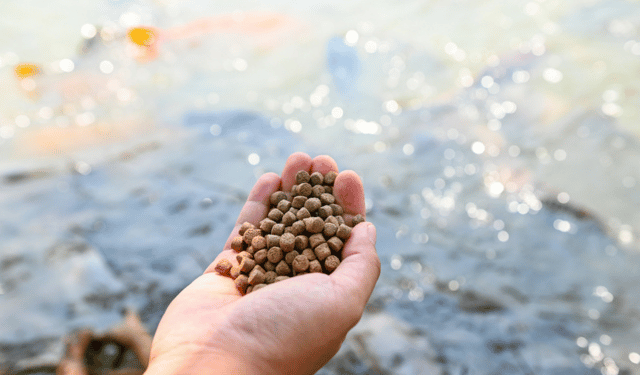
The Feed Certification Programme expanded its coverage to issues such as deforestation, land conversion, pressure on marine stocks used as raw materials, traceability and the prevention of forced labour in ingredient supply chains.
The clearest step took effect on 31 October: from that date, ASC-certified farms are required to use exclusively feeds coming from facilities that are also ASC-certified.
In practice, the organisation linked farm compliance directly to the compliance of its feed suppliers. By the end of 2025 the programme counts dozens of certified facilities in 29 countries, a sign of rapid adjustment by leading aquaculture feed producers.
Species Expansion and Improvement Programmes
2025 was also a year of scope expansion.
The inclusion of Atlantic cod in the combined standard with salmon, and the ongoing work on different catfish species, indicate the willingness to align certification with the real composition of the market, which does not end with the few species that attract media attention.
For producers who are not yet able to meet the full requirements, the Improver programme remains strategic: twenty active projects in six countries accompany farms and production areas along gradual improvement pathways, with intermediate targets and support for local bodies responsible for implementing interventions.
It is a pragmatic choice: those who are not ready for certification are not excluded from the conversation, but placed on a measurable pathway.
Field Agreements: Korea, Ecuador, Ghana
A significant part of ASC’s work in 2025 passed through agreements with institutions and companies in different contexts.
In South Korea a memorandum of understanding was signed with the National Institute of Fisheries Science, with the aim of bringing public research and certification requirements closer together. In Ecuador, ASC collaborated with a major processing brand and a local producer on a mangrove restoration project linked to the production of certified shrimp.
In Ghana, cooperation with the Aquaculture Chamber of Commerce led to the definition of a national Code of Good Practice, designed to make production conditions easier to verify and to facilitate access to markets that require recognised standards.
On the demand side, 2025 saw campaigns with retailers and foodservice in North America, initiatives in Europe inviting consumers to check the label, and a Sustainable Fish Week in Japan built with local partners. Awards dedicated to responsible seafood in several countries helped make the ASC logo more visible beyond industry insiders.
The Role of Italy and Southern Europe
In Southern Europe, and in Italy in particular, the issue touches a productive and cultural fabric in which fish consumption is part of everyday life.
In 2025 ASC consolidated its presence in Southern Europe through agreements with modern retail and organised foodservice. ASC-certified seabass, trout and salmon appeared more consistently on the shelves of major chains, often accompanied by dedicated informational materials.
For Italian marine-coastal aquaculture producers and for the processing industry, certification is no longer only an image plus: it becomes a competitive requirement to maintain access to foreign markets and respond to buyers who ask for data, not only statements.
Specialised communication plays a bridging role here: telling clearly what it means to adhere to ASC standards and how company management changes helps farmers, processors, retail and consumers move within the same reference framework.
Digital Traceability and Direct Contact with Farms
Alongside standards, 2025 also marked a step forward in tools.
The TraceASC digital traceability project was presented at the main shrimp-sector events as an example of how an IT system can reduce bureaucratic burdens and improve data quality along the supply chain.
The launch of the Programme Centre—a portal that organises standards, guidance and interpretive documents—and the Online Farm Mapping Tool, which improves the quality and readability of geographic information on farms, made rules and requirements more accessible for those who need to face an audit or update internal procedures.
Despite the digital push, direct contact with the field remained decisive. In 2025 ASC teams took part in dozens of fairs and conferences, speaking as panellists and organising Discovery Tours in Norway and Scotland. Here buyers, distributors and other stakeholders could visit certified farms, see how environmental parameters are monitored, how production cycles are managed and which data are recorded.
After the Breakthrough Year
By the end of 2025 ASC comes out with a more defined profile: not only a body that issues certifications, but a platform connecting standards, training, digital tools, dialogue with governments and work with major buyers.
A key question remains open: how quickly will the sector choose to align with this approach? The answer will depend on decisions by producers, feed manufacturers, processors, retailers and foodservice, and on the willingness to invest in data and processes, not only in communication.
For its part, ASC points to concrete progress in 2025 and a goal that is easy to state and harder to reach: making responsibly farmed fish the normal choice, not the exception. The coming years will show whether this framework was truly the turning point or only the first step in a journey that is still long.
For more insights on the future of Italian fisheries and the blue economy, follow ongoing coverage and analysis on Pesceinrete.