Overseas


In seafood foodservice, products are still presented mainly through species, size grade, availability and price. Yet provenance, traceability, composition, certifications, processing methods, and sensory and nutritional quality often distinguish products that may look identical on a price list. OHissa addresses this gap by combining its Wellness Quality approach with partner training, ensuring that knowledge travels alongside the product.
When buying food for home, consumers no longer consider price alone. They read labels, check provenance, compare ingredients, select high-quality protein sources and pay closer attention to nutrients. The relationship between food and everyday wellbeing has also become part of this assessment.
When the same person enters a restaurant, that awareness does not disappear. What diminishes is the amount of information available to exercise it.
The menu describes the dish and, in some cases, identifies the species used. It rarely explains which raw material was selected, where it came from, how it was processed and which characteristics it retained before reaching the kitchen.
This creates a contradiction: precisely when customers entrust the selection, preparation and presentation of a product to professionals, they often have fewer elements with which to assess its value and make an informed decision.
Information begins to disappear even before the product reaches the dining room, when its commercial presentation is reduced to format, quantity, availability, delivery and price.
These are essential considerations for procurement planning, but they cannot replace knowledge of the raw material.
When a price list cannot tell the product’s story
Two fillets from the same species and in the same size grade can have very different characteristics. The result is influenced by provenance, initial quality, processing times, any ingredients used, the freezing method and the continuity of the cold chain.
Temperature management until the fish reaches the condition best suited to cutting affects the structure of the flesh, its ability to retain moisture, its texture and the consistency of the result during preparation. This work requires experience, knowledge of the raw material and control over each stage of the process.
These aspects are difficult to convey in a single line on a price list, yet they become evident as soon as the fish is portioned, prepared and served.
Price per kilogram naturally remains one of the parameters in any negotiation, particularly at a time when labour, energy and raw-material costs are placing restaurant margins under considerable pressure. However, the assessment remains incomplete if it fails to consider how the product will perform in the kitchen and on the plate.
A carefully selected and properly managed raw material can provide greater stability, reduce yield losses and waste, make the kitchen team’s work easier and help maintain consistency from one service to the next.
The true value of excellent seafood, however, is not limited to kitchen yield. It also includes sensory quality, composition, relevant certification guarantees and nutritional characteristics.
The quality of high-biological-value proteins and the integrity of omega-3 fatty acids are nutritional elements that modern customers expect to find on the plate, because they choose fish not only for its flavour but also for their wellbeing.
Before treating two products as equivalent, buyers must first establish whether they are genuinely comparable.
Transparency must reach the diner
Provenance and traceability often remain confined to technical specifications and commercial documents. Composition, ingredients, certifications and nutritional profiles also struggle to enter the everyday relationship between those who distribute seafood and those who prepare it.
The solution is not to overwhelm restaurateurs with data or turn the menu into a technical document. It is to identify the information that helps people understand the raw material and transfer it to those responsible for purchasing, preparing and presenting it.
Terms such as “premium”, “selected” and “high quality” are now used across virtually every market segment. Their ability to differentiate a product is limited unless they are supported by concrete information.
Quality becomes understandable when it can be linked to provenance, processing, composition, certifications and professional performance, as well as to the value it can offer diners seeking a more informed relationship with food.
Customers do not necessarily expect an analytical data sheet alongside their dish. They do, however, value a credible explanation, especially when it allows them to apply the same awareness outside the home that already guides their everyday food choices.
If the story stops before reaching the chef and front-of-house team, even a high-quality raw material risks becoming indistinguishable. A restaurant may have made a careful purchasing decision without having the tools to make that value visible to its customers.
The OHissa model: preserving quality and sharing know-how
OHissa has developed its foodservice proposition around protecting the original sensory and nutritional characteristics of the raw material and sharing expertise throughout the supply chain.
Its focus covers both the qualities that emerge during professional use—structure, colour, flavour, texture and moisture retention—and the nutritional profile of the fish, which may include high-biological-value proteins and omega-3 fatty acids in different proportions depending on the species.
The model begins with raw-material selection and the expertise the company has developed in processing, temperature control and cold-chain management.
OHissa uses Ultra-Low Temperature technology at −60°C with the aim of preserving the product’s structure, texture, colour and original characteristics as far as possible, while limiting oxidation, moisture loss and changes to the muscle fibres.
The result depends on the interaction between initial quality, operator experience, processing times and process continuity.
Production is organised according to demand, avoiding the accumulation of previously processed stock. Support continues with guidance on correct product management and preparation in the kitchen. From this perspective, ultra-low-temperature technology is one of the tools used to protect the work invested in the raw material.
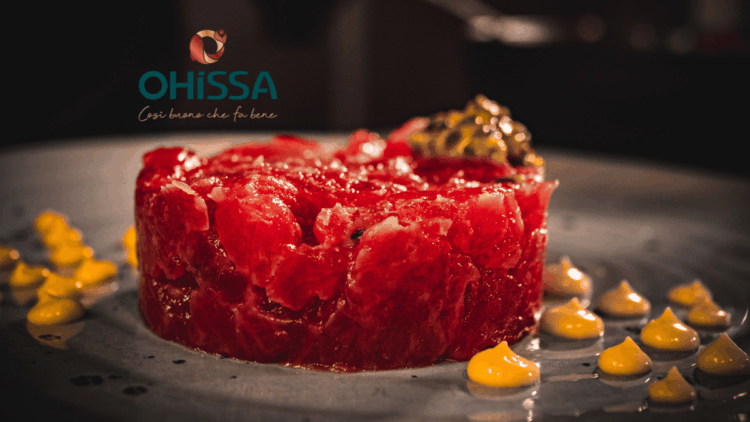
A practical example is Quore Tuna, obtained from the central section of the fillet and processed without preservatives, colourings or synthetic antioxidants.
Its professional assessment cannot be limited to its name or size. It must also consider raw-material selection, fibre consistency, colour, nutritional profile, cutting methods and intended uses. These elements allow chefs and buyers to verify whether the stated characteristics are reflected during preparation and on the plate.
Training those who sell and those who cook
Technology alone does not define the model. Preserving the characteristics of seafood creates value only when those who sell and use the product can recognise and manage them correctly.
OHissa supports wholesalers, sales teams and foodservice operators through training and product-focused sessions, providing the tools needed to understand each product and communicate its value throughout the supply chain.
Partners can also visit the facilities where the raw material is selected and processed, meeting the professionals responsible for the different stages of production.
Seeing the company’s work first-hand allows sales teams to present products using more substantial arguments than price alone. They can explain the differences, recommend the most appropriate applications and help chefs assess a raw material in relation to their own cuisine.
For wholesalers, this strengthens an advisory role in which distribution does more than move goods: it preserves and makes practical use of the knowledge accompanying the product.
For restaurateurs, it provides more complete information for purchasing decisions, kitchen organisation and building a credible narrative for diners. It can also improve professional seafood menu management and the quality perceived on the plate.
The foodservice sector needs to ensure that provenance, traceability, processing methods, composition and nutritional characteristics are not lost before seafood reaches the restaurant.
The challenge is to bring the same awareness consumers already expect at the supermarket into professional purchasing and onto the plate. When the supply chain works as one—from the sea to the kitchen—restaurants stop merely reacting to the market and return to what they do best: winning over the people at the table.
For those prepared to explain the seafood they serve, that future starts now.
Editorial note – This article was produced with limited assistance from AI tools. Editorial review and responsibility remain with the editorial team.