Overseas


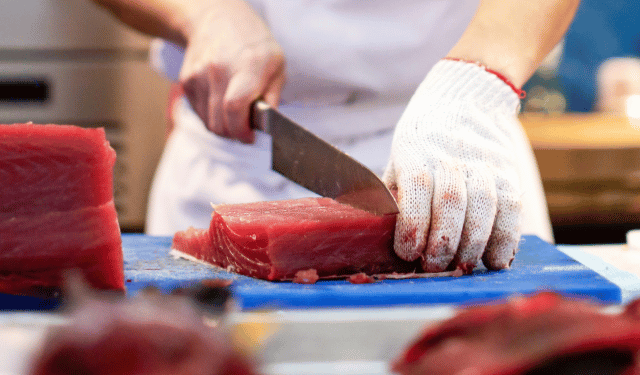
The suspected bluefin tuna poisoning case in Palermo highlights the importance of food safety in the seafood sector. While investigations by the competent authorities are still ongoing, the episode shows why fresh tuna requires strict cold chain control, traceability, trained operators and clear communication. The issue is not to demonize tuna or seafood retailers, but to distinguish isolated failures from the professional work of a supply chain that depends on trust, transparency and proper handling procedures.
A suspected poisoning case under investigation
Seven people have been hospitalized, one of them in intensive care, after consuming bluefin tuna purchased from a fish shop in Palermo. Investigations by the Carabinieri NAS are ongoing, and it will be up to the competent authorities to establish exactly what happened, where a possible critical issue may have occurred along the supply chain, and whether the product contained abnormal levels of histamine.
At this stage, therefore, any definitive conclusion would be inappropriate. The case, however, already carries clear public significance: it reminds us how delicate the handling of fresh tuna is and how much food safety depends on procedures, temperatures, controls and shared responsibility.
No general accusation against the seafood sector
The first point to clarify is precisely this: a suspected poisoning case cannot and must not become a generalized accusation against those who trade tuna correctly. The Italian seafood supply chain is largely made up of serious operators, fishmongers, wholesalers, restaurateurs and companies that work every day in compliance with traceability, cold chain, self-control systems and hygiene regulations.
It is also in their interest that cases like this be analyzed rigorously, without media shortcuts and without confusing honest work with any improper conduct by a few.
Why tuna requires particular attention
Bluefin tuna is one of the symbolic products of the Mediterranean, but it is also a particularly sensitive food matrix. Like other fish rich in histidine, including mackerel, sardines and anchovies, it can develop histamine when storage conditions are not adequate.
The issue is insidious because histamine is not simply a matter of “spoiled fish” that can always be detected by sight or smell. A product may still look appealing and yet cause significant symptoms, often within a short time: nausea, skin redness, sudden malaise, burning sensations, gastrointestinal disorders and, in more severe cases, serious clinical conditions in more vulnerable individuals or when concentrations are high.
Cooking does not eliminate histamine
The real critical point is that, once formed, histamine is not eliminated by cooking or freezing. This is also a fundamental message for consumers: cooking a tuna steak properly is not enough to make it safe if the cold chain has previously been compromised.
Prevention, therefore, does not take place in the pan, but earlier, along the supply chain, through correct refrigeration, controlled timing, suitable transport, reliable records and trained personnel.
The misleading role of tuna color
There is also a second issue, different but culturally connected: color. Consumers often associate the bright red color of tuna with freshness. It is an understandable habit, but it is not always sufficient.
In recent years, European authorities have drawn attention to fraud linked to the illegal treatment of tuna with substances capable of altering its appearance and making it look fresher or of higher quality. In such cases, the risk is not only commercial but also health-related, because color can mask deterioration and reduce the consumer’s ability to perceive a product that has not been properly stored.
Appearance is not a food safety guarantee
Treatment with carbon monoxide has also repeatedly been identified as a practice capable of artificially maintaining the red color of tuna and masking deterioration. This is not to suggest that this has anything to do with the Palermo case, because no public element currently allows such a connection to be established.
The point is different: with tuna, appearance can be misleading, and seafood safety cannot be entrusted to the consumer’s eye.
Traceability and cold chain control
For this reason, the Palermo case should be read as a reminder of the seriousness required across the supply chain, not as an attack on the tuna trade. Traceability is essential, but on its own it does not exhaust the issue of safety.
Knowing where a product comes from makes it possible to reconstruct its path and identify responsibilities. Ensuring that the same product has been handled correctly requires continuous checks on temperatures, storage methods, exposure times, sales procedures and operator training.
Professional operators protect the entire sector
Those who work properly have nothing to fear from accurate communication on these issues. On the contrary, they should be the first to support it.
A fish shop that documents product origin, keeps accurate records, respects temperatures, trains its staff and never pushes sales beyond safety margins is protecting not only the consumer, but also the reputation of the entire seafood sector. In a market increasingly exposed to mistrust, professionalism becomes a commercial guarantee even before being a regulatory obligation.
Avoiding fear and misinformation
The other risk is that episodes like this generate a disproportionate emotional reaction: fear of tuna, suspicion toward fish shops, distrust of fresh seafood. That would be a mistake.
Tuna is not a food to be demonized. It is a product of great gastronomic and economic value, but it requires competence, respect for rules and awareness. The problem is not tuna itself, but any breakdown in the conditions that guarantee its food safety.
What consumers should understand
Consumers, for their part, must learn not to stop at appearance. A bright color is not a certificate of freshness. A price that is too convenient for a premium product should invite caution.
Buying from reliable operators, asking for information on origin, and paying attention to how the product is displayed and stored are simple but important behaviors. The quality of fish is not recognized only at the counter: it is built before the counter.
A lesson for the seafood supply chain
The Palermo case will follow its investigative and health-related path. It will be up to the authorities to clarify the facts, establish any responsibilities and protect consumers.
For the seafood sector, however, the lesson is already clear: food safety is not a technical detail to be left in the background, but a central component of product value. Bluefin tuna deserves communication that matches its importance: rigorous, not alarmist, capable of distinguishing between real risk and generic suspicion, between fraud and honest work, between a single episode and the reputation of an entire supply chain.
Trust depends on transparency
Trust in fresh fish is not defended by denying problems. It is defended by addressing them with transparency, controls and professional culture.
Because in the modern seafood market, the true sign of quality is not only the color of tuna, but the seriousness of those who bring it to the consumer.