Overseas


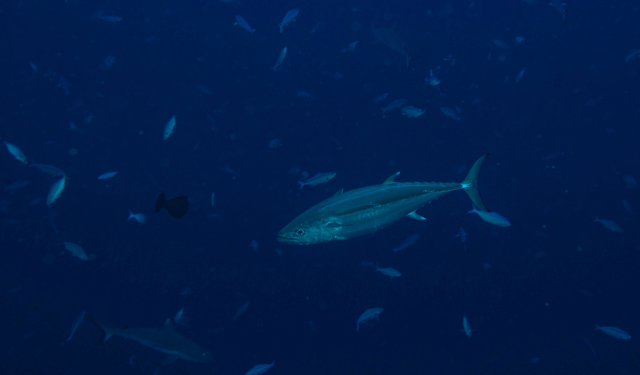
Tuna sustainability has become one of the most relevant issues for the seafood sector, especially in the Mediterranean, where bluefin tuna tells a story that would have seemed almost impossible twenty years ago. The species that was once considered one of the most threatened symbols of these waters has not only recovered, but is now being caught in growing quantities. In 2025, the port of Marsala, Italy’s leading landing point for bluefin tuna, recorded around 178 tonnes of landings, equal to almost two thousand specimens, according to data made public by the Coast Guard. Two decades ago, such a figure would have been viewed as an environmental scandal. Today, it is evidence that a shared and hard-won management system has produced results.
The global picture, however, remains complex. The Status of the World Fisheries for Tuna report, published in March 2025 by the International Seafood Sustainability Foundation, assessed 23 stocks of the seven main commercial tuna species. According to the report, 65% of stocks are at a healthy level of abundance, 26% are in an intermediate condition and 9% are overfished. The same analysis shows that 91% of stocks are no longer subject to overfishing, while 87% of global tuna catches, equal to around 5.2 million tonnes in 2023, come from populations considered healthy. Skipjack tuna plays a decisive role in this result, accounting for more than half of global tuna catches and remaining stable in the main fishing areas.
FAO has reached similar conclusions. In its Review of the State of World Marine Fishery Resources 2025, presented in June at the United Nations Ocean Conference, tuna and tuna-like species were found to be sustainable in 87% of the assessed stocks, with 99% of landings coming from responsibly managed sources. This is a significantly better result than the average performance of global marine fisheries. Fragile areas remain, including some bigeye tuna populations and the western Atlantic bluefin tuna stock. The increasing use of FADs, fish aggregating devices, also continues to raise concerns because of bycatch.
The European story deserves particular attention. In the early 2000s, Atlantic bluefin tuna was close to collapse. Estimated catches had fallen to 10,000 tonnes in 2007, the year in which ICCAT, the International Commission for the Conservation of Atlantic Tunas, adopted a strict recovery plan. The measures included rigid quotas, reduced fleets, shorter fishing seasons and international inspections. Over the following two decades, adult biomass recovered to around 60% of the reference level for sustainability, roughly twice its lowest point. These results led ICCAT, meeting in Seville at the end of 2025, to increase total allowable catches for the 2026-2028 period: +19.3% for the eastern Atlantic stock and +13% for the western stock.
For Italy, the MASAF decree signed on 1 April 2026 set the national quota at 6,182.6 tonnes, up by around 17% compared with the 5,283 tonnes of the previous season. The structure of the allocation has also changed. Part of the new quota is finally being assigned to small-scale coastal fisheries, which had previously been largely excluded, while the number of authorised vessels is increasing by around 40%. The measure was discussed in Trapani on 11 April during a meeting promoted by the Libero Consorzio Comunale and moderated by Pesceinrete, with the participation of MASAF Undersecretary Patrizio La Pietra and Graziella Romito, Director General for Maritime Fisheries. The Undersecretary described the decree as “experimental” and opened the door to further dialogue with local territories, showing that the adjustment phase is still far from complete.
Beneath the surface of this success, unresolved issues remain. WWF and other organisations have long warned that increasing quotas too quickly could jeopardise the recovery of bluefin tuna. ICCAT estimates also indicate that, in some areas of the basin, up to 20-30% of the bluefin tuna caught could come from illegal, unreported or unregulated fishing, known as IUU fishing. Recent investigations have also highlighted the oligopoly of Italian quotas: 19 purse seiners have access to the system, mostly controlled by Sicilian and Campanian shipowners, while small-scale fishers trying to re-enter the sector face a mechanism that tends to strengthen those who are already inside it.
The issue of tuna fattening farms also remains open. Producing one kilogram of farmed bluefin tuna can require around fifteen kilograms of forage fish. The sector is concentrated mainly in Malta and Spain, while in Italy the regulatory framework remains unclear. In recent months, Greenpeace forced the municipality of Battipaglia to revoke the concession for a new facility, bringing the debate back to the environmental impact and governance of tuna farming.
On the consumption side, Italy remains the second-largest European producer of canned tuna after Spain. ANCIT data for 2024, presented in May 2025, indicate a market value of €1.65 billion, up 1.5% on the previous year and equal to almost 70% of the entire canned seafood sector. Exports reached 30,600 tonnes, an increase of 9.57%, mainly directed towards Germany, Greece and Croatia, but also Canada and the Gulf countries.
Six out of ten Italians consume canned tuna at least once a week, while per capita consumption, calculated on ISTAT data, stands at around 2.36 kilograms per year. Two species dominate the cans: skipjack tuna and yellowfin tuna, the latter particularly appreciated by the Italian industry for its organoleptic qualities.
Since 2014, European regulation has required producers to indicate both the species and the FAO fishing area on the label. Areas 71, 77 and 81 in the Western and Central Pacific, together with area 37 in the Mediterranean, are considered among the most reliable in terms of stock status and management quality. Areas 51 and 57 in the Indian Ocean remain among the most critical. When specified on the label, “pole and line caught” or “purse seine on free schools”, meaning without FADs, indicate more selective fishing methods. These may seem like small details, but they are precisely where the consumer’s role in tuna sustainability begins.