• HOME
  • CHI SIAMO
  • CONTATTI
  • PARTNER
  • PUBBLICITÀ
  • NEWSLETTER
  • ARCHIVIO
    • Bandi e Opportunità
    • Speciali
    • Rubriche
    • Nutrizione e salute
    • Interviste
    • Video
martedì 15 Settembre, 2026
Pesceinrete
  • Pesca
  • Nutrizione e salute
  • Acquacoltura
    • Acquaponica
    • Algocoltura
  • Approfondimenti
  • Tecnologia
  • Sostenibilità
  • Mercati
  • OverseasNew
Nessun Risultato
Vedi tutti i Risultati
Pesceinrete
  • Pesca
  • Nutrizione e salute
  • Acquacoltura
    • Acquaponica
    • Algocoltura
  • Approfondimenti
  • Tecnologia
  • Sostenibilità
  • Mercati
  • OverseasNew
Nessun Risultato
Vedi tutti i Risultati
Pesceinrete
Nessun Risultato
Vedi tutti i Risultati

Home Overseas

Blue foods in the WFP Global Outlook 2026

Hunger is rising fast. The ocean could help—if we let it.

Alice Giacalone by Alice Giacalone
23 Febbraio 2026
in Overseas
Blue foods in the WFP Global Outlook 2026

Blue foods in the WFP Global Outlook 2026

Blue foods in the WFP Global Outlook 2026 are the missing chapter in a document that estimates 318 million people will face crisis-level hunger or worse in 2026—more than double the 2019 figure.

The figures that accompany this outlook are brutal. Nearly 38 million children under five are acutely malnourished across dozens of nutrition crises, while funding constraints are forcing hard choices about who gets help and who is left out. Yet as the report calls for “innovative responses,” innovation still seems largely land-locked.

That blind spot matters, because food insecurity is not just about empty stomachs. It is also about bodies that deteriorate for lack of micronutrients—what many experts describe as “hidden hunger.” The World Health Organization estimates that more than 2 billion people are deficient in key vitamins and minerals. Calories can come from cereals; resilience, growth, and cognitive development often depend on nutrients that fish and other aquatic foods can provide efficiently.

And here is the paradox: aquatic foods deliver roughly 6% of total protein worldwide (and about 15% of animal proteins) even though the ocean covers most of the planet. In 2021, aquatic animal foods provided at least 20% of per-capita animal protein to 3.2 billion people—evidence of a nutritional role that is already massive, and still underused.

Aquaculture’s historic overtake

In 2022, a structural shift became official: aquaculture surpassed capture fisheries as the main source of aquatic animals for the first time in history. Global aquaculture output reached 130.9 million tonnes, with 94.4 million tonnes of aquatic animals, representing 51% of total aquatic animal production.

This growth does not erase the scars of the past. Bottom trawling remains one of the most visible symbols of extraction without limits—devastating habitats and turning living seabeds into flattened ground. Some ecosystems can rebound when pressure stops, but recovery can vary dramatically by habitat, from relatively fast rebounds in certain fish communities to very slow recoveries for sensitive deep-sea structures.

And waste is still a moral and logistical failure: in 2021, an estimated 23.8 million tonnes of aquatic foods were lost or wasted—about 14.8% of global production.

Innovation that heals the sea

If the goal is to feed more people without destroying the source, the most interesting shift is not “more volume at any cost,” but better methods—selective, circular, and regenerative.

Ava Ocean, for example, has developed seabed harvesting designed to identify and selectively collect shellfish while avoiding the “ploughing” effect associated with dredging. In Colombia, Enthos is building a circular model that upcycles food waste into insect-based proteins and oils for feed—reducing dependence on marine ingredients and keeping more wild fish available for direct human consumption.

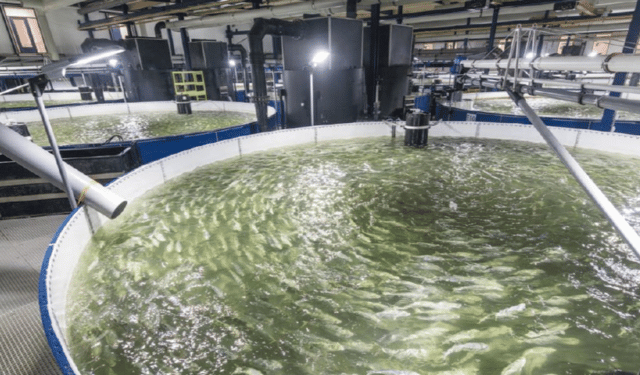
There are also European bivalve strategies such as MITO, focused on scaling clam seed production through hatcheries and nurseries—an approach aligned with low-impact protein and ecosystem services that shellfish farming can provide. And for high-value finfish, land-based recirculating aquaculture systems (RAS)—like those developed by The Kingfish Company—show how production can move closer to controlled biosecurity and reduced interaction pressure on marine ecosystems.

Protecting the ocean, for real

Protection is not a slogan; it is governance and enforcement. A science-based reassessment of protection quality found that only about 2.6% of the global ocean is implemented and fully or highly protected—the kind of protection most likely to deliver real ecological outcomes.

That number is the reality check behind the hope: when protection is real, recovery can be fast in the right places, and the ocean’s productivity can return sooner than many people assume.

A humanitarian lever hiding in plain sight

By 2030, projections suggest 512 million people could still be chronically undernourished. The FAO’s Blue Transformation roadmap argues that meeting demand sustainably requires at least 35% growth in global sustainable aquaculture production by 2030, especially where food deficits are highest.

The ocean is not just water. It is a nutrient reservoir, a climate regulator, and—handled intelligently—one of the most concrete options we have to reduce hidden hunger while building resilience. The uncomfortable question is no longer whether blue foods can help, but why they are still treated as an afterthought in parts of the global food-security agenda.

Image: The Kingfish Company.

Sources (selected): WFP Global Outlook 2026 summary page. FAO SOFIA-related aquaculture and nutrition figures. WHO statement on micronutrient deficiencies. WEF estimate on aquatic food loss and waste. Marine Protection Atlas / protection-quality baseline (2.6%).
Tags: acute food insecurityAquacultureaquatic foodsAva Oceanblue foodsBlue Transformationbottom trawlingcapture fisherieschild malnutritioncircular economycircular feedclimate changeconflict and hungerEnthosFAOfish consumptionfood insecurityfood waste valorizationGlobal Outlook 2026global protein intakehidden hungerhunger crisisinsect mealmalnutritionmarine ecosystemsmarine protected areasmicronutrient deficiencynutrition securityocean protectionRASrecirculating aquaculture systemsseafoodseafood loss and wasteselective harvestingSOFIA 2024sustainable aquacultureThe Kingfish CompanyWFPWorld Food Programme
CondividiTweetCondividiPinInviaCondividiInvia
Articolo precedente

FEAMPA, approvata la sub-graduatoria per l’arresto definitivo della pesca a strascico

Prossimo articolo

Oltre l’80% del pesce è importato: l’Europa non è più autosufficiente

Alice Giacalone

Alice Giacalone

Autrice Pesceinrete Alice Giacalone scrive per Pesceinrete occupandosi di attualità, imprese, mercati e scenari della filiera ittica. Nei suoi contributi segue l’evoluzione del settore seafood con attenzione ai temi che incidono sul lavoro degli operatori, dalla pesca all’acquacoltura, dalla sostenibilità alle dinamiche commerciali.

Articoli Correlati

Fishing vessel at sea as warmer ocean temperatures and El Niño shift fish distribution and fishing grounds

El Niño is set to become very strong. Warmer seas are redrawing the geography of fishing

by Luca Di Noto
15 Settembre 2026

What happens to fisheries when seas become warmer? Warmer seas do not simply mean fewer fish. They can change where...

Imported caviar at the centre of the European debate on origin transparency

Imported caviar, European aquaculture calls for clearer origin information

by Mariella Ballatore
11 Settembre 2026

Imported caviar from non-EU countries has become a test case in European aquaculture’s call for greater origin transparency. FEAP warns...

Italian seafood presented to buyers at Seafood Expo Asia in Singapore

From blue crab to red shrimp, buyers put Italy’s seafood supply chain to the test in Singapore

by Redazione
9 Settembre 2026

From blue crab seeking an industrial supply chain to traceable bivalve molluscs and red shrimp for fine dining, Italy is...

Salmon fillet on the processing line at Freezco Eesti in Tallinn

Freezco expands salmon processing for the italian market

by Davide Ciravolo
7 Settembre 2026

Freezco has expanded salmon processing for the Italian market through Freezco Eesti, a facility in Tallinn launched in May 2026....

Lascia un commento Annulla risposta

Il tuo indirizzo email non sarà pubblicato. I campi obbligatori sono contrassegnati *

Questo sito utilizza Akismet per ridurre lo spam. Scopri come vengono elaborati i dati derivati dai commenti.


Articoli più letti

  • 10 pesci costosi e prelibati
  • Le specie di sarago del Mediterraneo
  • Pesci con più e meno mercurio
  • Molva, una ricchezza del Mare del Nord
  • Molluschi bivalvi: descrizione e caratteristiche
  • Congelare il tonno in scatola
  • Gattuccio e palombo, gli squali buoni da mangiare
  • Triglia: caratteristiche e proprietà nutrizionali
  • Mangiare il tonno crudo: vantaggi e pericoli
  • Sgombro e lanzardo, pesce azzurro per il cuore
Pesceinrete

Pesceinrete è la testata giornalistica unica in Italia ad occuparsi di pesca commerciale ed acquacoltura. In quanto canale tematico e dai contenuti specializzati, si rivolge direttamente agli operatori della filiera con una comunicazione targettizzata che risponde alle esigenze del settore.

Segui le nostre pagine social

Stock images by Depositphotos

Newsletter

Categorie

  • News Ittico
  • Pesca
  • Acquacoltura
  • Associazioni di categoria
  • Sindacati
  • ONG
  • Tecnologia
  • Sostenibilità
  • Mercati
  • Eventi e Fiere
  • Overseas
  • Nutrizione e salute
  • Approfondimenti
  • Chi siamo
  • Policy editoriali
  • Partner
  • Contatti
  • Pubblicità
  • Newsletter
  • Mappa del sito

© 2026 INRETE S.R.L. P.Iva: 02557660814 - Pesceinrete - Il quotidiano del settore ittico | Credits

Pesceinrete
Gestisci Consenso

Usiamo cookie tecnici per far funzionare il sito, e cookie statistici (anche di terze parti) per capire come viene usato e migliorarlo. Puoi accettare tutto, rifiutare tutto o scegliere quali attivare — restando comunque libero di navigare senza restrizioni.

Funzionale Sempre attivo
L'archiviazione tecnica o l'accesso sono strettamente necessari al fine legittimo di consentire l'uso di un servizio specifico esplicitamente richiesto dall'abbonato o dall'utente, o al solo scopo di effettuare la trasmissione di una comunicazione su una rete di comunicazione elettronica.
Preferenze
L'archiviazione tecnica o l'accesso sono necessari per lo scopo legittimo di memorizzare le preferenze che non sono richieste dall'abbonato o dall'utente.
Statistiche
L'archiviazione tecnica o l'accesso che viene utilizzato esclusivamente per scopi statistici. L'archiviazione tecnica o l'accesso che viene utilizzato esclusivamente per scopi statistici anonimi. Senza un mandato di comparizione, una conformità volontaria da parte del vostro Fornitore di Servizi Internet, o ulteriori registrazioni da parte di terzi, le informazioni memorizzate o recuperate per questo scopo da sole non possono di solito essere utilizzate per l'identificazione.
Marketing
L'archiviazione tecnica o l'accesso sono necessari per creare profili di utenti per inviare pubblicità, o per tracciare l'utente su un sito web o su diversi siti web per scopi di marketing simili.
  • Gestisci opzioni
  • Gestisci servizi
  • Gestisci {vendor_count} fornitori
  • Per saperne di più su questi scopi
Personalizza
  • {title}
  • {title}
  • {title}
  • Home
  • Nutrizione e salute
  • Pesca
  • Acquacoltura
  • Approfondimenti
  • Tecnologia
  • Sostenibilità
  • Mercati
  • Overseas English NEW
  • Archivio
  • Chi siamo
  • Contatti
  • Partner
  • Pubblicità
  • Newsletter
Nessun Risultato
Vedi tutti i Risultati

© 2026 INRETE S.R.L. P.Iva: 02557660814 - Pesceinrete - Il quotidiano del settore ittico | Credits