Overseas


Lofoten Seaweed represents a new frontier for Norwegian seafood: not only fish, salmon or stockfish, but seaweed harvested in the waters of the Lofoten Islands and transformed into ingredients for contemporary cuisine. Founded by Angelita H. Eriksen and Tamara Singer, the company brings together roots in the local fishing tradition and Japanese food culture, developing easy-to-use products, from umami ingredients to seasonings for chefs and consumers. The case fits into a growing global market: according to FAO, 37.8 million tonnes of seaweed were produced worldwide in 2022, while Europe, despite seeing the sector as a resource for the blue economy, still produces very little compared with Asia. The challenge today is not only to produce seaweed, but to make it understandable, sustainable and genuinely usable in the kitchen.
The sea beyond fish
In the Lofoten Islands, the sea has never been just a landscape. It is work, food, identity and family memory. For generations, it has meant cod, seasonal fishing, stockfish, coastal communities and hands trained to read the weather, the wind and the cold. Today, in that same environment, another interpretation of Norwegian seafood is taking shape: one that is not limited to fish to be caught or farmed, but extends to the broader heritage of marine resources that can be understood, transformed and brought into the kitchen through new languages.
After the story of the Norwegian seafood model, the case of Lofoten Seaweed allows us to look at another side of the same trajectory: broadening the scope of Norwegian seafood without losing the connection with origin, territory and reputation.
This is where Lofoten Seaweed comes in. Founded by Angelita H. Eriksen and Tamara Singer, the company is built around a clear idea: the future of food also passes through the sea, not only through fish, but through marine resources that are still underused in European cuisine.
Lofoten Seaweed does not try to present seaweed as an exotic trend or as a healthy ingredient to be consumed out of duty, but as a gastronomic raw material that can enter the kitchen if it is made understandable, easy to use and recognisable in terms of taste. The work is concrete: taking something that many European consumers still find unfamiliar and turning it into salts, seasonings, dried leaves and ingredients that can truly become part of a recipe, without asking people to completely change the way they cook.
A global market that is no longer a niche
The numbers explain why seaweed can no longer be dismissed as marginal. According to FAO, in 2022 global fisheries and aquaculture production reached a record 223.2 million tonnes, divided between 185.4 million tonnes of aquatic animals and 37.8 million tonnes of seaweed. This figure changes the perspective, because it places seaweed within the broader system of aquatic foods, no longer at the edge of gastronomic experimentation for a limited audience.
Within this scenario, seaweed occupies a particular position. It is not fish, shellfish or crustaceans, yet it is already part of the economy of the sea, with applications ranging from human food to feed, from cosmetics to fertilisers, from pharmaceuticals to biomaterials. UNCTAD notes that the global seaweed market has more than tripled in twenty years, rising from 5 billion dollars in 2000 to 17 billion dollars in 2021.
International trade, however, reveals an important detail: in 2021, global seaweed exports were worth around 943 million dollars, while imports were worth around 1.2 billion dollars, still a limited share compared with the overall value of the sector. This means that much of the production is consumed or processed in domestic markets, especially in Asia, where seaweed does not need to be explained from scratch because it is already part of food culture.
Alongside Asian dominance, however, new production areas are also emerging, as shown by the growing interest in Latin America and the Caribbean, where macroalgae, biostimulants and new marine supply chains are beginning to attract greater attention.
Europe, strong potential and limited production
Europe sees seaweed as one of the resources of the new blue economy, but the issue is not simply to imagine future growth: it is to understand whether supply chains, companies, standards, industrial processing and, above all, consumers willing to actually use these products already exist. The European Commission, in its document “Towards a strong and sustainable EU algae sector”, cites an estimate according to which European demand for seaweed could grow from around 270,000 tonnes in 2019 to 8 million tonnes in 2030, with a potential value of 9 billion euros.
These are important numbers, but they should not be read with automatic enthusiasm. Estimating potential is one thing; building a supply chain capable of producing, processing, certifying, distributing and selling is another. The Commission itself recalls that in 2019 Asia accounted for 97% of global seaweed production, while European Union production amounted to 0.085 million tonnes, just 0.2% of the global total.
If Europe really wants to enter this field, it cannot limit itself to importing products or using seaweed as a niche ingredient for curious restaurants. This is closely linked to the evolution of the European seaweed industry, still divided between research, production potential and the difficulty of turning innovation into solid commercial supply chains.
For now, the European path does not seem to be one of large volumes, where the Asian advantage remains enormous, but rather one of quality, traceability, processing, food service and high-value ingredients. Within this logic, the case of Lofoten Seaweed is interesting precisely because it does not claim to compete with China, Indonesia, Korea or Japan on quantity, but tells another story: wild seaweed harvested in a recognisable territory, responsible harvesting protocols, easy-to-use products and a gastronomic positioning aimed at both chefs and final consumers.

Two stories, one idea of the sea
The story of Lofoten Seaweed begins with the meeting of Angelita H. Eriksen and Tamara Singer, two different paths that help explain why the company is not simply a marketing operation around the idea of “the food of the future”. Angelita grew up in Napp, in the Lofoten Islands, within a family culture linked to fishing, cod, manual work and the daily life of coastal communities; Tamara, raised in New Zealand by a Japanese mother, brings a familiarity with seaweed as a food ingredient that is far from obvious in Europe.
This intersection is one of the strongest aspects of the company. On one side are the roots in the traditional fisheries of the Lofoten Islands; on the other is the inspiration of Japanese food culture, where seaweed has been used for centuries in broths, rice, soups, seasonings and home cooking. Lofoten Seaweed was born within the local seafood tradition, but uses that foundation to look towards a new sustainable seafood industry, also inspired by a food culture in which seaweed has long been part of everyday cuisine.
This is not a romantic detail, because a product that is still unfamiliar to European consumers becomes more understandable when it can stand between two worlds: the territory that produces it and a food culture that already knows how to use it. Without this passage, seaweed risks remaining an interesting ingredient on paper, but one that is difficult to bring onto the plate.
From ocean to table
The path is that of “from ocean to table”, a formula that, in this case, should not be read as a slogan but as a process: first harvesting, then processing, and finally the development of products with a clear function in the kitchen.
Harvesting seaweed and selling it as an indistinct raw material is not enough, because a new ingredient truly enters the market only when it is made stable, storable, readable and, above all, usable by those who cook, both professionally and at home. This is the same step that interests many buyers: understanding in which product formats for the market a new ingredient can reach food service, retail or the food industry.
An Italian consumer may be curious about seaweed, but if they do not know how to use it in a dish, what to pair it with or what flavour to expect, that curiosity fades quickly. A seaweed salt, for example, is much more immediate than a large dried leaf to be rehydrated: it can be used on a fish fillet, a boiled potato, an egg, a soup or grilled vegetables. A marine sprinkle can work as a savoury seasoning, while a whole leaf speaks more easily to restaurants, where chefs have the tools and skills to work with broths, marinades, flavoured butters, sauces and textures.
It is in this intermediate space that Lofoten Seaweed finds its position: technical enough to interest professionals, but simple enough to reach those who cook at home.
The key word is umami
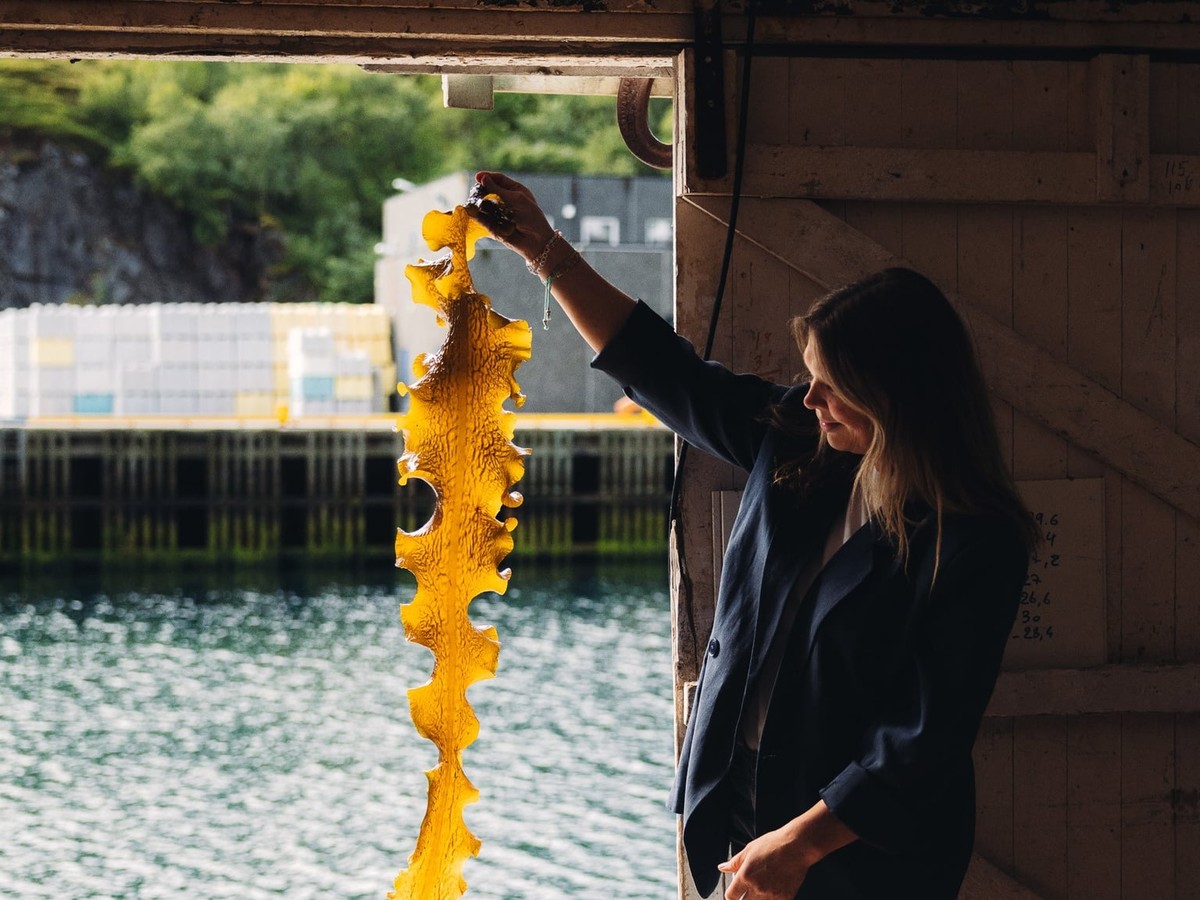
To explain seaweed to European consumers, the key word is not only sustainability, nor health. First of all, it is taste. Lofoten Seaweed places strong emphasis on umami, the fifth taste alongside sweet, sour, salty and bitter, and describes it as the deep savoury note found in ingredients that are also very familiar to us, such as Parmesan, tomato, mushrooms and soy sauce.
This passage is crucial because it avoids a frequent trap: presenting seaweed only as an ingredient that is “good for the planet” or “rich in properties”. Consumers may be sensitive to sustainability and interested in nutrition, but at the table they return to what gives pleasure, flavour and real possibilities of use. If an ingredient does not improve the dish, it remains a good intention.
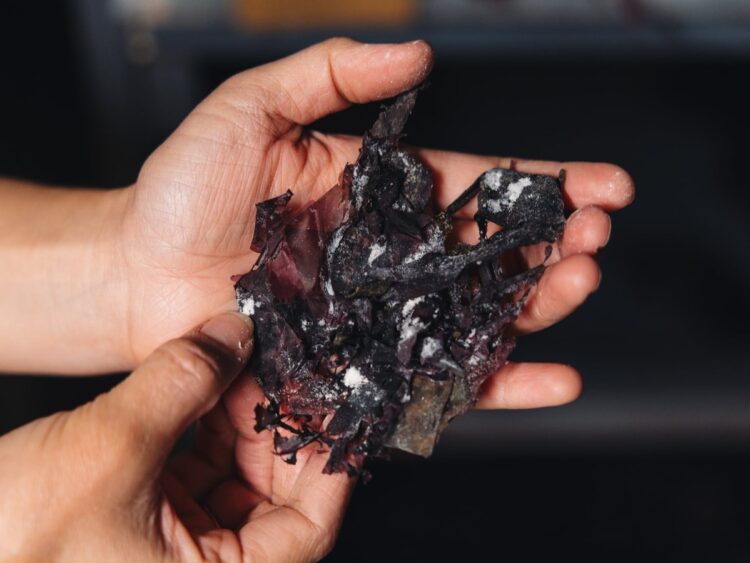
Lofoten Seaweed also explains a useful detail: the white coating that may appear on dried seaweed is not mould, but the natural result of salts and sugars emerging during drying, and it is precisely there that part of the umami intensity is concentrated. It is a small example, but it says a lot about the challenge: many characteristics of seaweed need to be explained, because what a producer sees as quality may look like a defect to a consumer who is not used to it.
Sustainability, without slogans
Lofoten Seaweed highlights several reasons why seaweed is considered an interesting resource: it does not require freshwater, does not need pesticides, does not cause deforestation, can be regenerative and contributes to oxygen production. These are important arguments, but they must be handled with care, because no resource is sustainable by definition if it is harvested, cultivated or commercialised badly.
Even a natural resource can become fragile when demand grows, which is why the difference lies not only in the seaweed itself, but in the method. Lofoten Seaweed states that it harvests wild seaweed in clean waters, away from human activity, using harvesting and monitoring systems designed to support regrowth and reduce the impact on marine life; the company also points to its DEBIO organic certification and to the Seagreens of Norway label, developed by the Norwegian Seaweed Association for raw materials from Norwegian waters that are responsibly harvested.
This is where the discussion becomes serious. Talking about “the food of the future” is easy, while building protocols, recording harvesting data, respecting regrowth times and maintaining balance with the ecosystem require expertise, control and continuity.
Why the Lofoten Islands matter
The place is not a neutral backdrop. Lofoten Seaweed describes the Lofoten Islands as an area marked by strong currents, underwater ecosystems fed by the Gulf Stream, marine biodiversity and particular light conditions, going so far as to define those waters as an “Arctic underwater garden”.
Here too, the postcard effect should be avoided. The Lofoten Islands matter not only because they are beautiful to photograph, but because they give origin, narrative and credibility to an ingredient that might otherwise be perceived as anonymous. In seafood, this passage is fundamental: we have seen it with stockfish, where territory, climate, time and expertise build value; with seaweed the mechanism is different, but the principle is similar, because the raw material becomes stronger when it is connected to a place, a method and a concrete use.
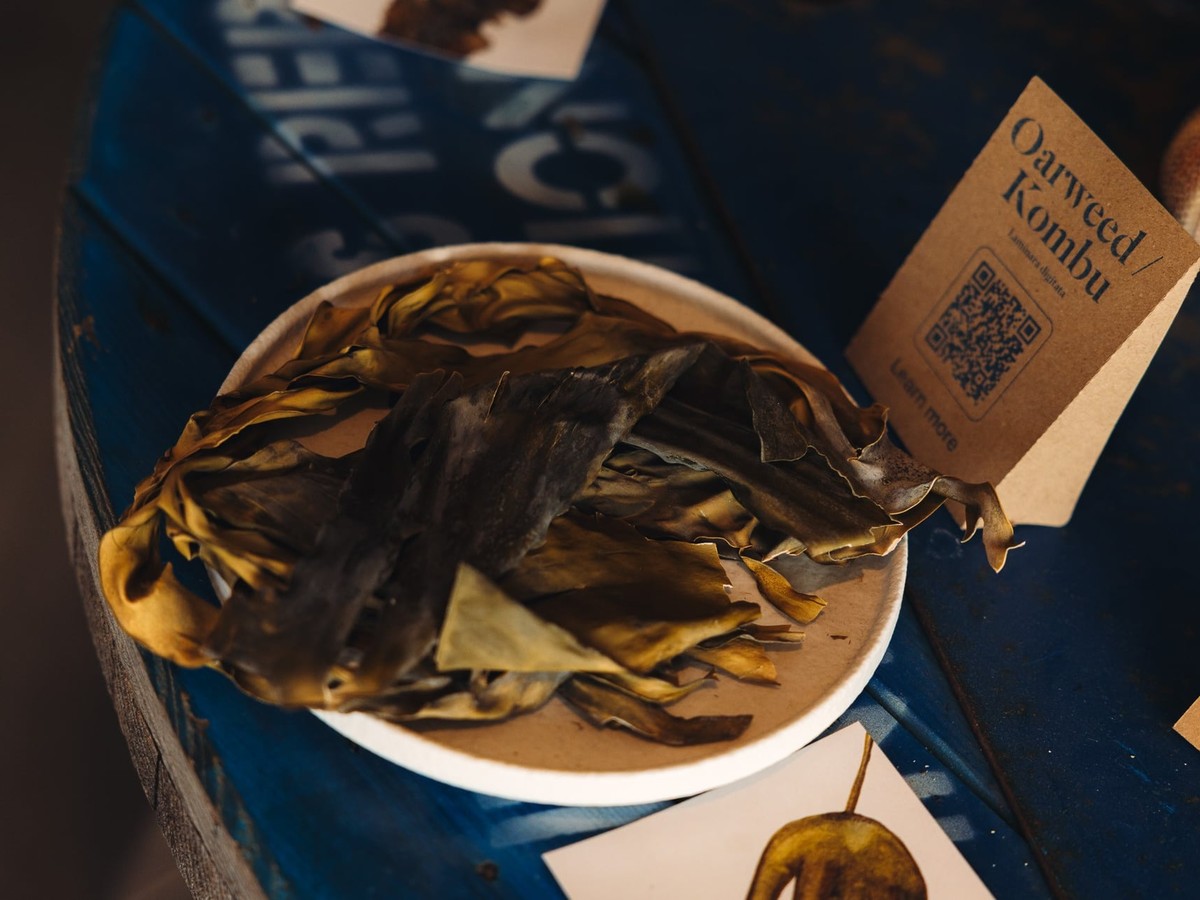
The company works with several species, including Ocean Truffle, Wakame, Sugar kelp, Dulse, Nori and Kombu, selected for abundance, flavour and texture. For the average consumer these names are still distant, while for a chef they represent possibilities: savouriness, texture, vegetal and marine notes, aromatic depth.
From the Lofoten Islands to Noma
The move towards haute cuisine is one of the strongest parts of the story, because it shows that seaweed can move beyond both the health-food niche and the exotic category. Lofoten Seaweed states that it supplies some of Norway’s leading restaurants, as well as Michelin-starred chefs and Bocuse d’Or winners in Europe, and its website lists, among others, Noma, Kvitnes Gård, Ceto, Team Norway Bocuse d’Or, TAK Oslo and TAK Stockholm.
The most interesting path is the one that takes seaweed from the coasts of the Lofoten Islands to the plates of European haute cuisine, including the case of Noma in Copenhagen, where winged kelp has been valued as a gastronomic raw material rather than as a simple marine curiosity.
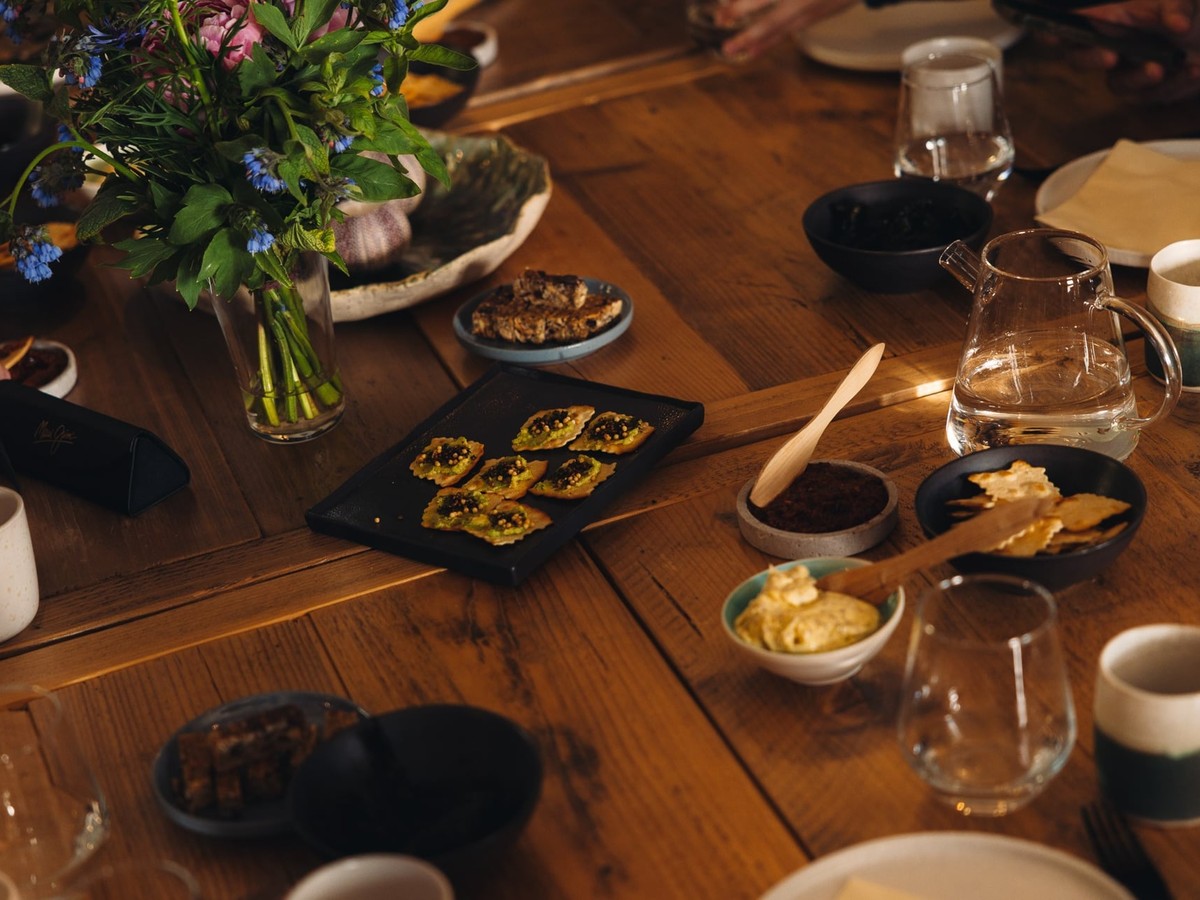
An example helps explain the direction: seaweed can enter a fish sauce as a savoury marine note, it can add depth to a broth, it can be used in a marinade, in flavoured butter, alongside a shellfish or on a vegetable. In these cases, it does not replace anything and does not force the dish; it adds a layer of taste, exactly as other umami-rich ingredients do.
Why this matters for Italy
In Italy, seaweed is not part of everyday cooking and has entered the collective imagination mainly through sushi, ramen, snacks, health-oriented cuisine and contemporary restaurants. It does not yet have a real domestic grammar, which is why it would be wrong to imagine sudden mass consumption or to present seaweed as a product destined to rapidly conquer the Italian market.
And yet there is some space. Italian cuisine knows marine savouriness very well, even though it usually links it to fish, shellfish, crustaceans, bottarga, colatura, preserves and seafood broths. Seaweed could add a different nuance, vegetal and marine at the same time, gradually entering a seaweed salt for baked fish, a broth for seafood pasta, a seasoning for vegetables, a focaccia, a sauce for shellfish, a savoury baked product or plant-based cuisine, where the deep savouriness of umami is often precisely what is missing.
The point is not to put seaweed everywhere, nor to force tradition, but to understand where it can work without feeling like a foreign body. Italian consumers are already encountering Japanese, Korean, Nordic, plant-based, fermented and umami flavours; if seaweed truly enters consumption, it will probably do so from there, through simple products, restaurants, gastronomic crossovers and formats capable of making it feel less distant.
It is no coincidence that seaweed has already entered the debate on seafood alternatives, where it becomes a raw material for plant-based preparations that try to evoke salmon, tuna, caviar and other marine flavours.
A new frontier for Norwegian seafood
The case of Lofoten Seaweed works because it is not disconnected from Norway’s seafood history. It does not come from an urban laboratory trying to invent a “green” product, but from a fishing village, from a coastal culture, from a sea already recognised for cod, stockfish, Norwegian salmon and the quality of its raw materials.
The difference is that here the product is less immediate. Salmon already has a global grammar, stockfish has a strong memory in some Italian regional cuisines, while seaweed still needs to be explained: what it is, how it is used, what it tastes like, why it costs what it costs, why it comes from there, why it can belong in a European dish without feeling forced.
It is a supply chain challenge, but also a language challenge. If stockfish tells the long memory of the Lofoten Islands and salmon tells the strength of Norwegian aquaculture, seaweed tells a new possibility: a sea that does not end with the catch, but becomes an underwater garden, an ingredient, a culture of taste and a space for innovation.
Lofoten Seaweed is trying to do exactly this: take an ancient resource, give it a contemporary form and show that the future of Norwegian seafood may also pass through something we have looked at for a long time without truly seeing.
Sources
FAO, The State of World Fisheries and Aquaculture 2024
European Commission, Towards a strong and sustainable EU algae sector
UNCTAD, Seaweed holds huge potential to bring economic, climate and gender benefits and The Potential of Seaweed to Advance Food, Environmental and Gender Dimensions of the SDGs
Lofoten Seaweed, company website and company materials