Overseas


Norway does not export seafood products alone. It exports a system: a way of connecting the sea, coastal communities, companies, markets and reputation. Salmon represents the most contemporary side of Norwegian seafood, driven by aquaculture, convenience and global consumption trends. Stockfish, on the other hand, tells a much older story, built on cod, climate, time, craftsmanship and Italian regional traditions. Together, these products show why the Norwegian model matters: because it turns origin into trust, supply chain into value and tradition into a language that still speaks to today’s market.
A supply chain built before it was told
When people talk about Norwegian seafood, very different products are often placed under the same label: salmon, which speaks to contemporary consumption; stockfish and salted cod, tied to centuries of trade and food culture; fjord trout and, more recently, seaweed, which opens a new chapter in the relationship between the sea, food and innovation. Holding such different worlds together is not easy, yet Norway manages to do it because for decades it has treated its seafood sector as a system.
This is where Norway stands apart from many other producing countries. Good species, cold waters and high-quality raw material are not exclusive to Norway. What Norway has learned to do is connect these elements to a coherent narrative and sustain that narrative over time. Fish reaches the market not as an isolated item, but as part of a national identity built with patience.
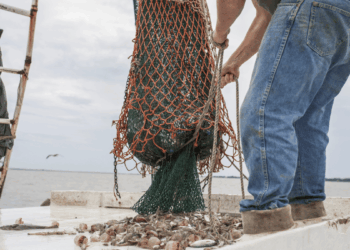
The Lofoten Islands are one of the places where this model is easiest to understand, because there the link between product, territory and community is not an abstract concept. Norwegian stockfish, above all, is born from the meeting between cod and natural conditions that cannot be controlled at will: cold, wind, humidity and drying time. Then comes human work: the eye and nose of those who select the fish, the ability to recognize quality, texture and final market destination.
It is in this passage, between nature and craft, that the strength of the Norwegian seafood supply chain becomes visible: not only producing fish, but turning it into recognizable value.
That leads to the central point. Norway does not only export seafood products. It exports a way of organizing the relationship between the sea, companies, territories and markets. This is the perspective from which the relevance of the Norwegian model should be understood.
The Norwegian model
The Norwegian Seafood Council is an integral part of this model. Established in 1991, based in Tromsø, it operates under the Norwegian Ministry of Trade, Industry and Fisheries and is financed by the Norwegian seafood industry itself. Its work covers market access, consumer analysis, marketing, communication and reputation, with around 80 people and offices in 14 markets.
This is not a bureaucratic detail. It means that the work of individual companies is placed within a common framework, able to collect data, read the evolution of consumption and build a shared narrative that strengthens the promotion of the entire Norwegian seafood sector. Inside that framework, very different products are able to preserve their own identity without weakening the power of origin.
The figures show the scale of the machine. In 2025, Norway exported 2.8 million tonnes of seafood products, reaching a record value of NOK 181.5 billion, equal to €16.44 billion: around 38 million meals a day, every day of the year. Aquaculture accounted for 73% of export value, while wild fisheries represented 27%. This is the country’s dual identity: on one side salmon and trout, modern volume products; on the other, wild fish and traditional processing.
The comparison with Italy helps frame the picture. In 2024, Italy imported 1.11 million tonnes of fisheries and aquaculture products for human consumption, worth €7.6 billion. Exports stopped at 179,182 tonnes and €1.2 billion, leaving a trade deficit of €6.4 billion. Italy is a major seafood market, but one that depends heavily on imports to meet domestic demand.
It is within this relationship, between a highly organized exporter and a market strongly dependent on imports, that much of the connection between the two countries should be read. It is not only a matter of volumes and prices. It is a matter of position. Those who can explain where a product comes from and why it can be trusted enter the market as an interlocutor, not merely as a supplier.

Italy and Norway: seafood for today, seafood for tradition
According to the Norwegian Seafood Council, Italy is now one of the most important markets for several Norwegian products. But this relationship cannot be described in a uniform way, because Norwegian salmon and Norwegian stockfish follow very different consumption patterns.
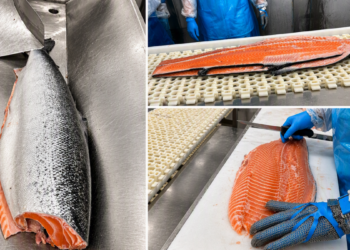
Salmon speaks the language of today’s consumption. The Italian market for Atlantic salmon is worth around 154,000 tonnes, and in 2025 Norway’s share reached 88%, with exports to Italy worth NOK 6 billion, equal to around €544 million. It is a convenient product: it works for sushi, poké, quick home meals and contemporary foodservice, while also benefiting from a strong nutritional narrative.
Stockfish is different. It is not designed to simplify everyday life, nor does it win consumers over through immediacy. Yet its weight remains significant. In 2025, Norway exported 2,893 tonnes of stockfish worth €80.2 million. Volumes fell by 19%, reaching a historic low, but Italy remained the leading market: 1,571 tonnes imported from Norway, with value increasing by €1.3 million compared with the previous year.
This is the path followed by many traditional products. They may become less frequent on the table, more expensive and more closely linked to special occasions, but they do not disappear from food culture. On the contrary, precisely when they stop being everyday products, they need to be explained more clearly, because their value is not obvious to those who did not grow up with them in the kitchen.
Image caption
Preparation of a contemporary dish based on Norwegian salmon. Norwegian salmon represents the most modern side of Norwegian seafood, combining versatility, nutritional value and new consumption occasions.
Stockfish: community, work and identity
Stockfish is perhaps the product that best shows the link between a place, a climate and a craft. Catching cod is not enough. It requires the right season, the right wind, the right humidity, the right temperature, time and the hands of those who hang the fish and follow it for weeks, selecting and classifying it. It is knowledge accumulated over generations.
Tom-Jørgen Gangsø, Italy Director of the Norwegian Seafood Council, insists on a point that food communication often forgets: for certain products, value does not lie only in the raw material, but in the people and places that make the product what it is.
“Communicating the human dimension is essential. For Italian consumers, stockfish is not just a product: it is tradition, heritage and the people behind it,” he says.
The connection with Italy comes naturally. Stockfish runs through very different regional cuisines, from Veneto to Sicily, and everywhere it has entered festive recipes, family habits and dishes repeated from one generation to the next. It is an imported product that is not perceived as foreign. Over time, it has entered local kitchens to the point of becoming, in many areas, an ingredient of identity.
The same is true, Gangsø says, on the other side of the sea, where stockfish comes from coastal communities that have always produced it. “We believe this is a bond that unites the two countries, and one that is worth telling to Italians as well.”
Seen in this way, community is not a brochure detail. It helps explain why Norwegian stockfish remains so recognizable in Italy. Behind its quality are people who know how to read the sea and the season, who understand the right moment to hang the fish, how to follow it as it dries, and what its colour and texture say about where it will eventually be sold.
Image caption
Stockfish hanging on drying racks in the Lofoten Islands, at the heart of the Norwegian seafood supply chain. In Lofoten, stockfish is born from cod, climate, time and skills passed down through Norwegian coastal communities.

Like wine: raw material, climate and time
The comparison with wine proposed by Gangsø is useful because it moves the discussion away from generic tradition and back to real production. Like wine, stockfish depends on raw material, on those who process it and on specific natural conditions that cannot be recreated just anywhere.
Temperature, wind, sun, rain and time are not background elements. They are the process. If they change too much, the result changes as well. Then there is the daily care of those who follow the fish during drying and decide its path, all the way to final classification.
Read this way, the story avoids two traps. The first is reducing stockfish to folklore: a beautiful memory that no longer speaks to the market. The second is treating it like any other reference, forgetting that its value comes precisely from being a historic, technical, selected product that is difficult to standardize.
Stockfish does not become relevant again by changing its nature. It becomes relevant when it is explained better, in a market that needs to understand what lies behind a price, an origin and a processing method. This is where communication becomes part of the supply chain: not as an advertising trick, but as the ability to make understandable to everyone what today is often visible only to insiders.
Who decides quality: the vrakers
For Gangsø, the distinctiveness of stockfish comes from the meeting of nature, craft and quality control. Northern Norway, and the Lofoten Islands in particular, offer the right balance of temperature, wind and humidity. But nature alone is not enough. Someone must be able to interpret it, adapt to the seasons and understand what different markets require.
That role is largely played by the vrakers, the specialized selectors. They assess size, colour and texture according to strict criteria, and through experience that cannot be improvised they decide which market each fish should go to, because not every country looks for the same size, texture or yield.
This is the heart of the Norwegian model. Value is not left to the raw material alone. It is built along the entire chain, from fishing to drying, from selection to final storytelling. In this way, a natural product becomes a readable product for very different markets.
From salmon to stockfish: a broader Norway
The Norwegian seafood supply chain is not exhausted by a single product. Stockfish carries the long history of cod and coastal communities; Norwegian salmon expresses the strength of aquaculture and global consumption; salted cod opens the chapter of traditional processed products; seaweed, research and new marine ingredients show a seafood sector trying to expand its field of action instead of simply defending what already exists.
For the Italian market, the challenge is twofold. On one side, there is the need to protect traditional products, linked to regional cuisines and family memories. On the other, there is the need to broaden the idea of Norway as a seafood country capable of offering different products for different occasions.
Gangsø does not present this as a choice between the two. “The key is to keep them together, in a coordinated way. We should not choose between defending traditional products and broadening the perception of Norwegian seafood: we need a strong and coherent common framework, one that is still able to tell the specific value of each product.”
The distinction matters. What drives people to buy stockfish is not what drives them to buy salmon. In the first case, tradition, festivities and regional cooking carry weight. In the second, convenience, versatility, nutritional value and contemporary foodservice are decisive. Communicating them in the same way would be a mistake, because it would erase the very differences that make them recognizable.
What Italy can learn from this model
The comparison with Italy should not be taken literally, because the Italian seafood sector is very different: more fragmented, more tied to Mediterranean biodiversity, marked by small-scale fisheries, imports and highly diverse consumption habits.
Yet some elements of the Norwegian model deserve attention. The first is continuity between territory and market: place is not a backdrop, it is part of value. The second is the ability to turn origin into reputation, making it clear that behind a geographical name there is a system of skills. The third is the existence of a coordinated structure working for the whole industry without flattening the differences between individual products.
This issue is even more relevant when looking at European seafood consumption. In 2024, EU citizens’ expenditure on fisheries and aquaculture products rose by 4%, reaching €62.8 billion, but growth came mainly from prices: volumes declined. Household consumption of fresh fish fell by 5%, including in major consuming countries such as Italy.
In a market like this, where consumers remain interested in fish but are more price-conscious and less used to cooking complex dishes, value cannot be defended through availability alone. It must be defended through clear origin, reliability, supply continuity and the ability to explain the product credibly.
Image caption
Norwegian aquaculture tanks for salmon farming in a technological facility. The Norwegian seafood supply chain combines tradition and technology, from stockfish production to modern salmon farming.

When the supply chain becomes reputation
Norwegian seafood aims to be recognized not as imported merchandise, but as the result of an organized and controlled supply chain, able to speak to different markets without losing its connection to coastal communities.
This is where the Norwegian model becomes a case worth studying. It does not replace companies, it does not make products with different histories look the same, and it does not reduce Norway to an indistinct brand. It builds a common framework in which each product remains itself: stockfish with its historical depth, salmon with its versatility, salted cod with its link to traditional cooking, fjord trout and other products with the channels they may open.
For Italy, which remains one of the most important and complex markets for Norwegian seafood, this is probably the most useful lesson. Today, having good products is not enough. Quality, if not explained, remains invisible. Origin, if not made understandable, is just provenance. Tradition, if not updated in language, risks seeming distant.
Norway has worked precisely on this: it has turned the sea into a supply chain, the supply chain into reputation, and reputation into value. That is where the real strength of the model becomes visible: not in the promotion of a single product, but in the ability to make an entire system recognizable.