Overseas


When Pietro Querini arrived in Røst, in the Lofoten Islands, in 1432, stockfish already had centuries of production and trade behind it. Genetic analyses of cod remains found at the Viking-age trading port of Haithabu show that fish belonging to the Norwegian Arctic stock were reaching continental Europe between 800 and 1066. Written sources document commercial shipments of dried cod from northern Norway from the early twelfth century, while by the fourteenth century stockfish had become one of the country’s most important exports. Querini neither discovered it nor introduced it to Italy, but the story of his shipwreck created a lasting connection between Røst, Venice and the regional cuisines of Italy.
Before Querini, cod had already learned to travel
Before Venetian merchants, regional recipes and festivals devoted to baccalà, there was a very practical problem. Fresh fish did not last long and, in a world without refrigeration, communities needed to preserve the catch when it was abundant so that it could be eaten during winter or transported far from the coast.
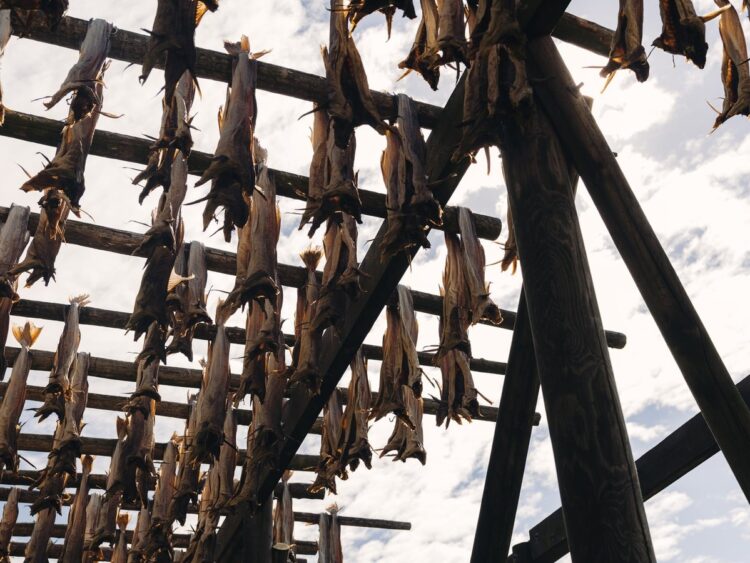
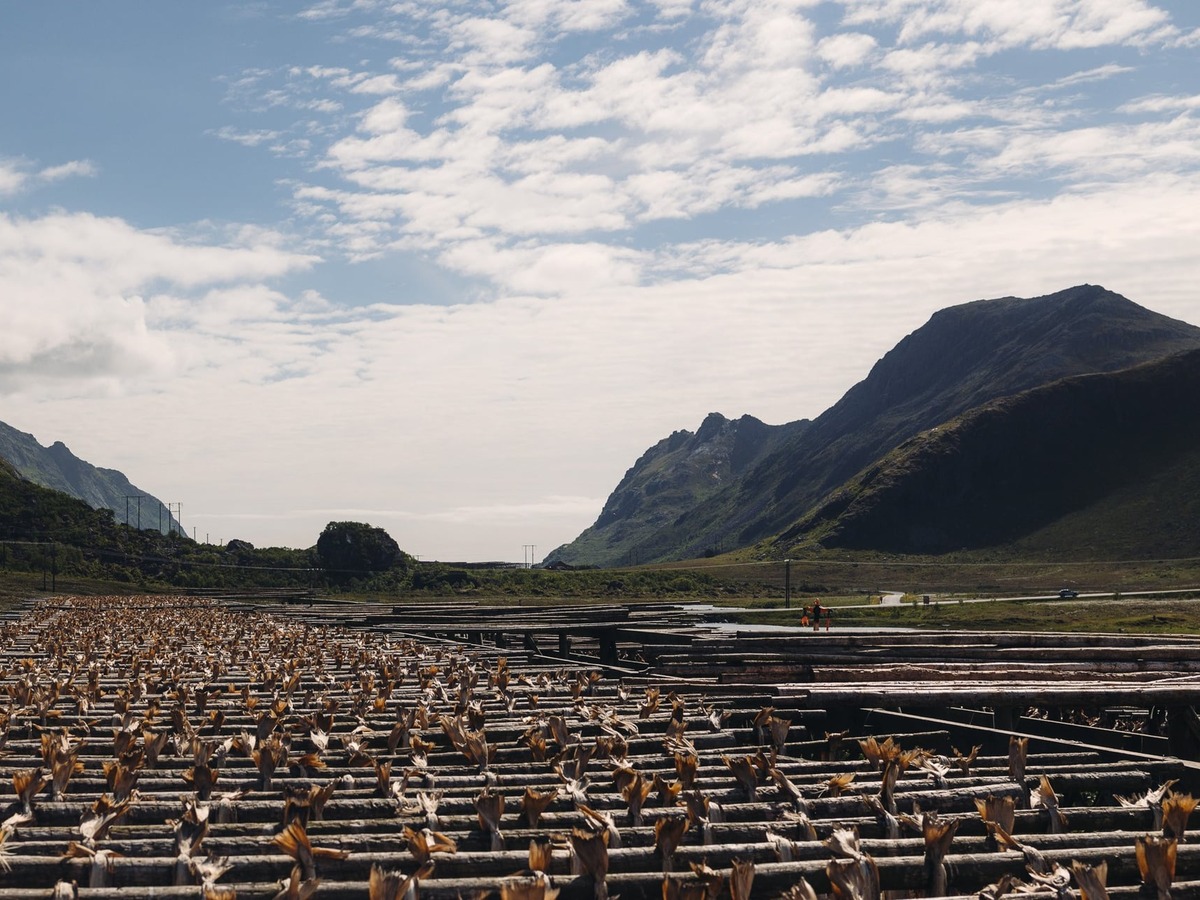
In the North Atlantic, the environment itself offered an answer. Cod caught in cold waters could be opened, cleaned and left to dry in the open air, relying on wind and low temperatures. As it lost most of its water, it became lighter, lasted longer and could survive journeys that fresh fish could never have endured.
Stockfish is the result of this transformation. Unlike salted cod, it is preserved without salt and relies entirely on natural drying. The distinction, also explained in our comparison between salted cod and stockfish, is not merely a technical one. Salt lies behind baccalà, while climate lies behind stockfish, entering directly into the quality and identity of the product in the Lofoten Islands.
Between the end of winter and the beginning of spring, the cold slows deterioration without freezing the fish, while the wind allows moisture to leave gradually. It is a delicate balance that cannot be reduced to simply hanging fish outdoors, because temperature, humidity and drying time all affect the final result.
Traces left by the Viking Age
The connection between northern communities and preserved fish is ancient, although for a long time it was described mainly through sagas and oral traditions. Material evidence now provides a firmer foundation.
A study published in PNAS analysed five cod bones found at Haithabu, an important Viking-age trading port located in present-day Germany. The remains, dated between 800 and 1066, carried genetic characteristics associated with Northeast Arctic cod, the same stock that still migrates towards the Lofoten coast.
Those bones cannot reconstruct an entire trading system, but they tell us something precise. Cod from northern Norway had already travelled more than a thousand kilometres and reached one of the Baltic region’s major commercial centres. For such a journey to have been possible, preservation would have been essential, most likely through drying.
The evidence does not turn every Viking sailor into a stockfish merchant, nor does it prove the existence of a supply chain organised in the same way as the later medieval trade. It does show, however, that Norwegian cod was moving through Europe centuries before Querini’s voyage and that the northern seas were already feeding communities far from the fishing grounds.
When the Lofoten Islands entered the European economy
The shift from preservation for local consumption to trade on a much larger scale happened gradually. A chapter on medieval food history published by Cambridge University Press notes that several sources document commercial shipments of stockfish from northern Norway from the early twelfth century.
Fishing was no longer limited to feeding coastal communities. A growing share of the catch was dried so that it could be stored, transported and sold. Settlements such as Vágar, in the Lofoten Islands, developed around this economy, while Bergen became the main collection and distribution point for trade with Europe.
By the fourteenth century, stockfish had acquired enormous economic weight. According to historian Stefan Figenschow, it may have represented at least 80 per cent of the value of Norwegian goods exported to England and Germany. This was not a marginal speciality produced in a few remote villages, but one of the commodities that connected Arctic fisheries, Norwegian towns and European markets.
Bergen was crucial because it stood on the coastal route linking northern Norway with the rest of Europe. Fishermen and carriers brought dried fish to the city, where Norwegian, English and later Hanseatic merchants bought and redistributed it. Knut Helle’s study of medieval North Atlantic trade reconstructs a network extending well beyond the Lofoten Islands, where stockfish moved alongside grain, textiles, hides, salt and other goods needed by northern communities.
The shipwreck at Røst and the encounter with Venice
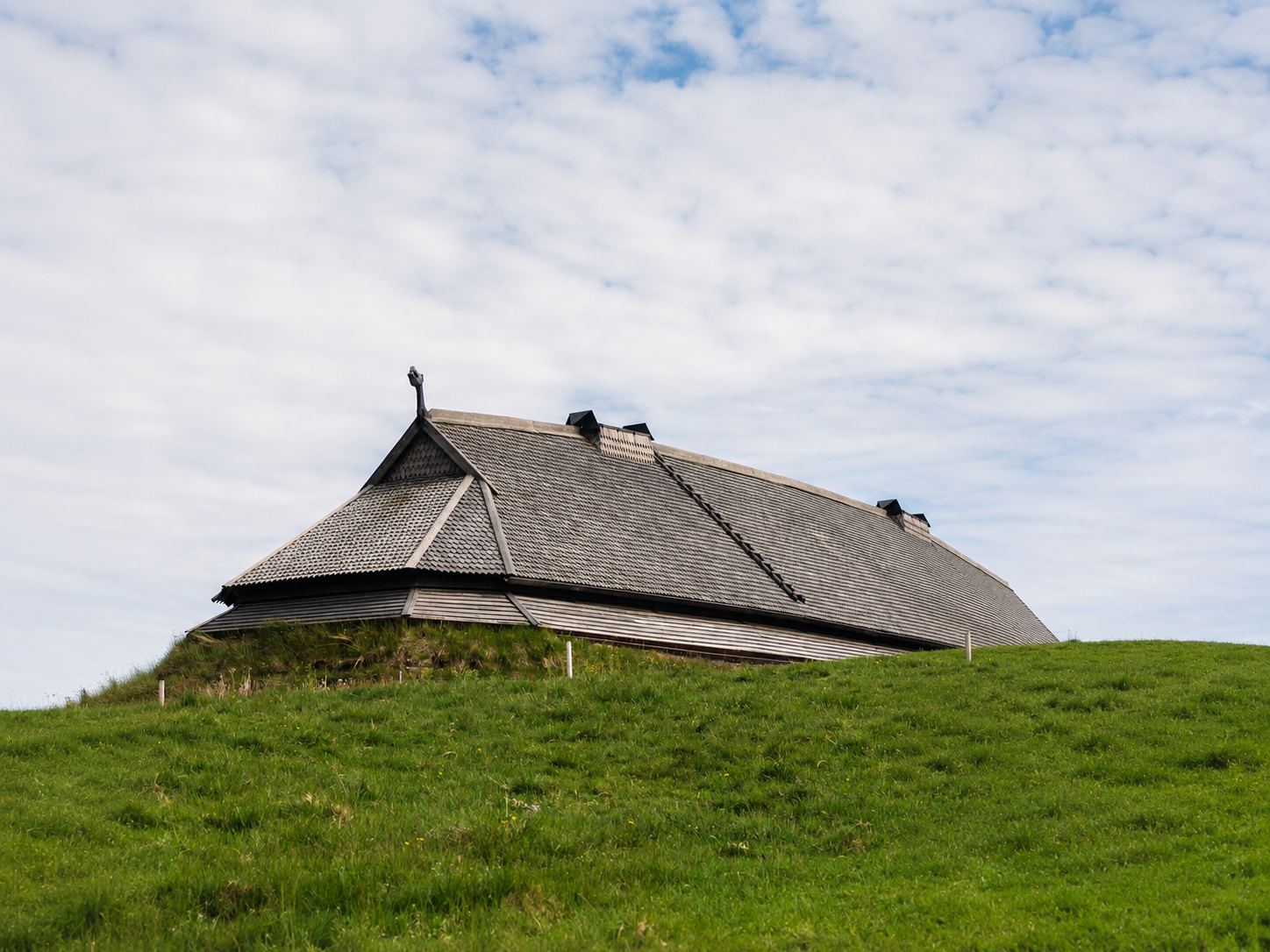
When Pietro Querini sailed from Candia, in Crete, on 25 April 1431, stockfish had therefore already been part of European trade for a long time. Querini was a Venetian patrician and merchant who knew both long-distance routes and the dangers of the sea. His vessel, the carrack Querina, was bound for Flanders with a cargo that included Malvasia wine, oil, cotton, spices and other goods intended for northern markets.
The voyage became a succession of mechanical failures, storms and forced changes of course. After months at sea, part of the crew abandoned the ship and continued in two smaller boats. Only one reached an uninhabited islet near Røst, where the survivors were found and rescued by local people in early 1432.
Querini remained in the Lofoten Islands for several months. He saw the fishermen’s homes, the organisation of the local communities, their trade with Bergen and, above all, the fish hanging outdoors to dry, which he recorded under the name stocfisi. When he returned, he described both the journey and a society that, despite the severity of its environment, appeared to him orderly, hospitable and deeply connected to the sea.
The episode is documented through several accounts preserved in manuscripts held by the Biblioteca Nazionale Marciana in Venice and the Vatican Apostolic Library. The versions do not agree on every detail, and their transmission, which culminated in Giovan Battista Ramusio’s sixteenth-century publication, remains a subject of historical study. The Via Querinissima now brings together an important part of these sources and the academic bibliography surrounding the voyage.
Querini did not discover stockfish
The idea that Pietro Querini was the first person to bring stockfish to Italy is memorable, appealing and probably too simple.
Dried fish had already circulated in European markets for centuries, and Venice had long traded with northern Europe. There is not enough evidence to claim that no one in the Italian peninsula had known or purchased stockfish before Querini. His voyage mattered in a different way, one that does not need to be exaggerated in order to remain remarkable.
Querini gave the route a face and a voice. Through his account, the fish of the Lofoten Islands entered Venetian memory alongside the shipwreck, the welcome received at Røst and the long return journey. A commodity already familiar to merchants acquired a biography, a recognisable place of origin and a human story that could be passed down.
The Italian edition Il naufragio della Querina, edited by Paolo Nelli, makes it possible to read the testimonies of Querini and his companions without reducing the episode to a gastronomic legend.
Why Venice was able to make it its own
Venice had the commercial and cultural tools needed to understand that fish. It was a city built on goods arriving from distant places and had long known how to turn foreign origin into local value. Stockfish was durable, relatively light compared with fresh fish and suited to maritime transport. Once soaked, it could enter the cuisine of fasting days and be combined with oil, onions, milk, spices and the many ingredients moving through the lagoon.
The dried cod began a second life there. In the Lofoten Islands it was the result of climate and seasonal fishing. In Venice it became an ingredient, then a habit and eventually a tradition.
Language still carries a trace of this appropriation. In the Veneto region, the word baccalà often refers to stockfish, while elsewhere in Italy it normally distinguishes salted cod from dried cod. Both baccalà mantecato and baccalà alla vicentina are in fact made with stockfish rather than salted cod in the technical sense of the term.
This is more than a simple lexical confusion. It shows how deeply the product entered local culture, acquiring a name of its own while partly losing, in everyday language, its original identity.
When a Norwegian fish becomes Italian cuisine
Stockfish did not remain confined to Venice. Following markets, ports, religious calendars and regional habits, it reached several areas of Italy and was adapted by cuisines that had little in common with one another.
In Liguria it encountered olives, pine nuts, potatoes and tomato. In Campania it entered festive dishes and preparations with olives, capers and peppers. In Calabria and Sicily it found sauces, onions, raisins, potatoes and vegetables. In Veneto it was worked until creamy or slowly cooked with milk and oil.
The raw material remained Norwegian, but each region rewrote it in its own culinary language. This ability to adapt explains why Norwegian stockfish is not seen in Italy merely as an imported product. Origin and culinary belonging are not the same thing, and the relationship between the two has been built over centuries.
The connection continues through popular festivals, restaurants and consumption, as explored in our article on stockfish, baccalà and the traditions linking Italy and Norway. The product changes from one region to another, yet retains a recognisability that very few imported foods manage to achieve.
A tradition cannot survive on memory alone
History by itself cannot secure the future of a product. Stockfish requires soaking, time and a certain familiarity with preparation, while a growing share of consumers look for manageable portions, ready-to-cook products and clear instructions.
People who grew up watching stockfish being prepared at home know how to judge texture, soaking time and handling. Those encountering it for the first time may instead see a rigid, expensive fish that is difficult to understand. The risk is that the tradition continues to speak only to people who already know it.
The same issue can be seen in the baccalà market, where fixed-weight formats, desalted products and easier preparation may help reach consumers who do not want to give up the product but lack the time or experience required for long preparation.
Stockfish can follow a similar path without losing its identity. Selected portions, clearer information, soaked products and food-service solutions can make the raw material more accessible, while professional catalogues such as Ittico Guida Buyer help buyers and operators compare origins, processing methods and commercial formats.
The story of Querini still deserves to be told, but alongside the shipwreck consumers also need to understand how quality stockfish is recognised, how it is processed, why sizes and grades differ, and which solutions are best suited to contemporary kitchens. Memory protects cultural value, while everyday use determines whether the product will continue to have a market.
A route that never truly closed
The Via Querinissima is now working to reconstruct the route between Røst and Venice as a European cultural itinerary. It does not follow only the geographical stages of the voyage, but also brings together archives, communities, food traditions and territories that recognise themselves in the history of the Querina.
The route does not belong solely to the past. Stockfish still leaves the Lofoten Islands and reaches Italian tables, although today it travels through modern logistics, health controls, quality grading and distribution networks that bear little resemblance to medieval trade.
Something, however, remains surprisingly similar. Cod is still entrusted to the northern air, while in Italy it continues to be soaked and transformed according to recipes that are now considered part of local heritage.
Querini is the best-known face of this history, but he is neither its beginning nor its end. Before him there were fishermen, routes and markets. After him came generations of cooks, families and merchants who gave stockfish an Italian citizenship without erasing its Norwegian origin.
The history of stockfish is ultimately the story of a food capable of changing language without losing the place it comes from. In the Lofoten Islands, it remains cod left to the wind. In Italy, it became a dish, a celebration and a memory. Between those two worlds lies a journey lasting centuries, far broader than the shipwreck that made it famous.
Sources
University of Cambridge, DNA from Viking cod bones suggests 1,000 years of European fish trade
Knut Helle, Bergen’s Role in the Medieval North Atlantic Trade
Via Querinissima, The Historical Sources of Pietro Querini’s Voyage